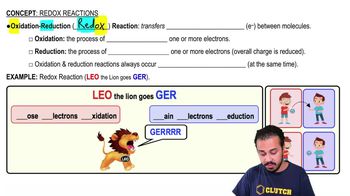
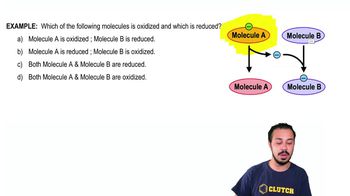
Redox reaction transfers electrons (e–) between molecules, involving oxidation (loss of electrons) and reduction (gain of electrons) occurring simultaneously.
What do NADH and FADH2 do in cellular respiration?
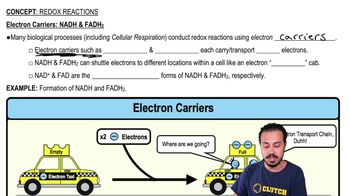
NADH and FADH2 are electron carriers that shuttle electrons to the Electron Transport Chain, transporting 2 electrons each.
What is aerobic cellular respiration?
Aerobic cellular respiration is the oxygen-requiring process that breaks down glucose to produce large amounts of ATP.
What is the overall chemical equation for aerobic cellular respiration?
Glucose + Oxygen → Carbon dioxide + Water + Energy (ATP); glucose is oxidized and oxygen is reduced.
List the stages of aerobic cellular respiration in order.
1) Glycolysis, 2) Pyruvate Oxidation, 3) Krebs Cycle (Citric Acid Cycle), 4) Electron Transport Chain & Chemiosmosis.
What are the two types of phosphorylation in aerobic respiration?
1) Substrate-level phosphorylation: direct transfer of phosphate to ADP. 2) Oxidative phosphorylation: uses energy from ETC to create ATP.
Where does glycolysis occur and what does it produce?
Glycolysis occurs in the cytoplasm, breaking glucose into 2 pyruvate molecules, producing 2 NADH and a net of 2 ATP.
What happens during pyruvate oxidation?
Each pyruvate is converted into Acetyl-CoA in the mitochondrial matrix, producing NADH and releasing CO2.
What is the main function of the Krebs cycle?
The Krebs cycle oxidizes Acetyl-CoA to produce ATP, NADH, FADH2, and CO2, regenerating oxaloacetate for the cycle.
What is the role of the Electron Transport Chain (ETC)?
ETC harnesses energy from electrons in NADH and FADH2 to pump H+ ions, creating a gradient used to produce ATP; oxygen is the final electron acceptor.
What is chemiosmosis?
Chemiosmosis is the diffusion of H+ ions across the mitochondrial membrane through ATP synthase, driving ATP production.
How many ATP molecules are produced from one glucose molecule in aerobic respiration?
Approximately 30-38 ATP molecules are produced from the complete oxidation of one glucose molecule.
What happens to cellular respiration without oxygen?
Without oxygen, the ETC stops, NADH accumulates, NAD+ decreases, and cells rely on fermentation to regenerate NAD+.
What is fermentation?
Fermentation uses electrons from NADH to reduce pyruvate, regenerating NAD+ and allowing glycolysis to continue without oxygen.
What are the two main types of fermentation?
Lactic acid fermentation (produces lactic acid) and alcohol fermentation (produces ethanol and CO2).
What is anaerobic respiration?
Anaerobic respiration uses molecules other than oxygen as the final electron acceptor in the ETC, producing less ATP than aerobic respiration.
Where does substrate-level phosphorylation occur in cellular respiration?
Substrate-level phosphorylation occurs during glycolysis and the Krebs cycle.
What is the final electron acceptor in aerobic cellular respiration?
The final electron acceptor is oxygen (O2), which combines with electrons and H+ to form water.
What is the net ATP gain from glycolysis?
Glycolysis produces a net gain of 2 ATP molecules per glucose molecule.
Why is oxygen essential for aerobic respiration?
Oxygen acts as the final electron acceptor in the ETC, allowing the chain to continue and ATP to be produced efficiently.
 Indietro
 01:44