 Indietro
Cellular Respiration and Fermentation - Chapter 9 Main Ideas
 01:53

Termini in questo insieme (21)
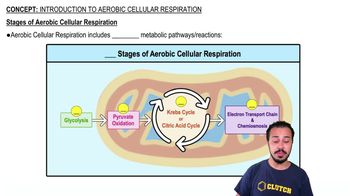
Glycolysis is the first step of cellular respiration where glucose is broken down into pyruvate, producing ATP and NADH.
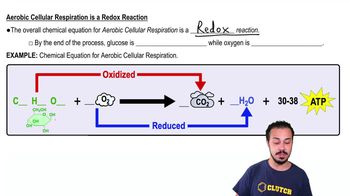
Glucose, 2 ATP, and 2 NAD+ molecules enter glycolysis.
2 pyruvate molecules, 4 ATP (net gain 2 ATP), and 2 NADH are produced.
Yes, 2 ATP molecules are used to start glycolysis.
Yes, energy is released as ATP and NADH, which store energy for later use.
Glycolysis occurs in the cytoplasm of the cell.
Yes, it is regulated by feedback inhibition, often by ATP and other metabolites.
Pyruvate oxidation converts pyruvate into acetyl-CoA, producing NADH and releasing CO2.
Pyruvate, NAD+, and Coenzyme A enter pyruvate oxidation.
Acetyl-CoA, NADH, and CO2 are produced.
It occurs in the mitochondrial matrix.
The citric acid cycle oxidizes acetyl-CoA to CO2, producing NADH, FADH2, and ATP.
Acetyl-CoA, NAD+, FAD, and ADP enter the cycle.
CO2, NADH, FADH2, and ATP are produced.
It occurs in the mitochondrial matrix.
Electron transport transfers electrons from NADH and FADH2 to oxygen through protein complexes, creating a proton gradient.
It takes place in the inner mitochondrial membrane.
Chemiosmosis uses the proton gradient from electron transport to drive ATP synthesis via ATP synthase.
Substrate-level phosphorylation directly forms ATP during glycolysis and the citric acid cycle; oxidative phosphorylation uses a proton gradient to produce ATP.
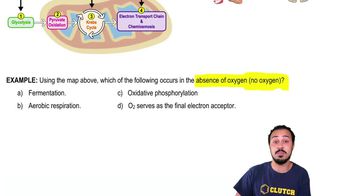
Cells perform fermentation to regenerate NAD+ allowing glycolysis to continue producing ATP anaerobically.
Fermentation is an anaerobic process that regenerates NAD+ by converting pyruvate into lactate or ethanol and CO2.