 Indietro
Chapter 1
 02:09
02:09

Termini in questo insieme (20)
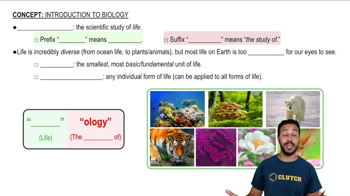
Biology is the scientific study of life and living organisms, including their structure, function, growth, evolution, and distribution.
Living organisms exhibit organization, metabolism, homeostasis, growth, reproduction, response to stimuli, and adaptation.
Homeostasis is the process by which living organisms maintain a stable internal environment despite external changes.
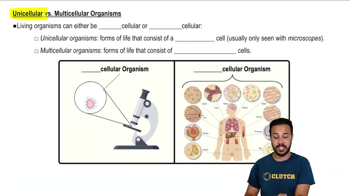
The cell theory states that all living things are made of cells, cells are the basic unit of life, and all cells come from pre-existing cells.
The two main types of cells are prokaryotic (without a nucleus) and eukaryotic (with a nucleus).
Metabolism refers to all chemical reactions that occur within an organism to maintain life.
Evolution is the process by which populations of organisms change over generations through genetic variation and natural selection.
DNA contains the genetic instructions used in growth, development, functioning, and reproduction of all living organisms.
Reproduction is the biological process by which new individual organisms are produced, ensuring species survival.
Adaptation allows organisms to adjust to their environment, increasing their chances of survival and reproduction.
Life is organized from molecules to cells, tissues, organs, organ systems, organisms, populations, communities, ecosystems, and the biosphere.
The scientific method is a systematic process of observation, hypothesis formation, experimentation, and conclusion to understand natural phenomena.
Biodiversity ensures ecosystem resilience, provides resources, and supports ecological balance.
Autotrophs produce their own food (e.g., plants), while heterotrophs consume other organisms for energy.
Ecology is the study of interactions between organisms and their environment.
A hypothesis is a testable prediction or explanation for a scientific question.
Cells are the fundamental units of life, performing all necessary functions to sustain an organism.
Natural selection is the process where organisms better adapted to their environment tend to survive and reproduce.
Enzymes act as catalysts to speed up chemical reactions in living organisms without being consumed.
Growth is an increase in size or number of cells, while development is the progression of changes in form and function.