 Indietro
chapter 27
 04:39

Termini in questo insieme (30)
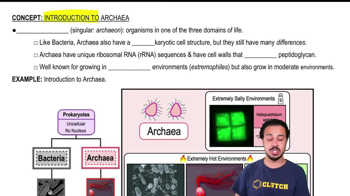
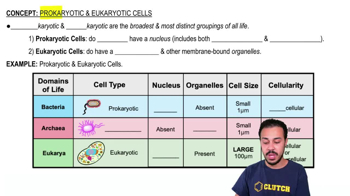
Single-celled organisms in domains Bacteria and Archaea, lacking a true nucleus and membrane-bound organelles. They are the most abundant organisms on Earth and adapted to diverse environments.
Spherical-shaped prokaryotic cells. One of the three common prokaryotic cell shapes.
Rod-shaped prokaryotic cells. One of the three common prokaryotic cell shapes.
A network of sugar polymers cross-linked by polypeptides found in most bacterial cell walls. Archaeal walls lack peptidoglycan.
Bacteria with simpler cell walls containing a large amount of peptidoglycan. They stain positive with Gram stain and are more susceptible to antibiotics targeting peptidoglycan.
Bacteria with complex cell walls having less peptidoglycan and an outer membrane with lipopolysaccharides. They are more resistant to many antibiotics.
A dense, sticky layer of polysaccharide or protein surrounding the cell wall that helps adherence, prevents dehydration, and protects from the host immune system.
A metabolically inactive structure formed by some bacteria under stress, allowing survival in extreme conditions for centuries.
Hairlike appendages on prokaryotic cells that allow them to stick to substrates or other individuals.
Longer appendages than fimbriae that pull cells together to enable DNA exchange during conjugation.
Structures used by prokaryotes for movement, composed of motor, hook, and filament proteins.
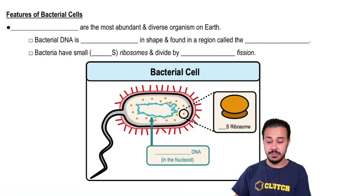
The region in a prokaryotic cell where the chromosome is located; it lacks a surrounding membrane.
Small rings of independently replicating DNA in prokaryotes, separate from the main chromosome. R plasmids carry antibiotic resistance genes.
Prokaryotic reproduction method where cells divide rapidly, producing genetically identical offspring.
The combining of DNA from two sources, increasing genetic diversity via transformation, transduction, or conjugation.
Movement of genes between different prokaryotic species, contributing to diversity and evolution.
Prokaryotic cells incorporate foreign DNA from their environment, potentially gaining new traits.
Bacteriophages transfer prokaryotic genes from one host cell to another.
DNA transfer between two prokaryotic cells via a pilus and mating bridge, usually one-way.
An organism that obtains energy from light.
An organism that obtains energy from chemicals.
An organism that requires CO₂ or related compounds as a carbon source.
An organism that requires organic nutrients to make other organic compounds.
An organism that requires oxygen for cellular respiration.
An organism poisoned by oxygen; uses fermentation or other substances instead.
An organism that can use oxygen if present or ferment if oxygen is absent.
Archaea that live in extreme environments uninhabitable for most organisms.
Extreme halophiles that tolerate or require highly saline environments.
Extreme thermophiles with adaptations stabilizing DNA and proteins at very high temperatures.
Obligate anaerobic archaea producing methane as a metabolic by-product, found in swamps, ice, and animal guts.