 Indietro
Chapter 6
 02:17

Termini in questo insieme (22)
Metabolism is all chemical reactions within an organism.
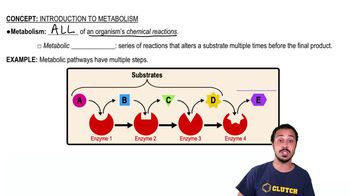
A series of chemical reactions that alter a substrate through multiple steps to produce a final product.
The initial molecule that undergoes changes in a metabolic pathway.
Enzymes catalyze each step, converting substrates into products.
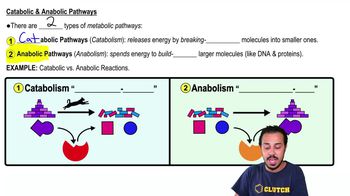
Pathways that release energy by breaking down molecules into smaller ones.
Pathways that require energy to synthesize larger molecules from smaller ones.
Exergonic processes that release energy.
Endergonic processes that require energy input.
Large molecules are broken down into smaller components, releasing energy.
Smaller molecules are built up into larger molecules, requiring energy.
The end molecule produced after all enzymatic steps are completed.
Think of a cat breaking down a pyramid into smaller pieces.
Think of building up larger structures from smaller building blocks.
Catabolism breaks down molecules; anabolism builds up molecules.
They help organisms manage energy and build cellular structures.
Synthesis of DNA and proteins is an example of anabolism.
Breaking down glucose during cellular respiration is an example of catabolism.
Multiple enzymatic steps that convert substrates into final products.
Energy is either released (catabolism) or required (anabolism) in metabolic pathways.
Catabolism involves exergonic processes that release energy.
Anabolism involves endergonic processes that require energy.
To transform substrates through enzymatic steps to manage energy and build cellular structures.