 Indietro
Chapter 8
 03:32

Termini in questo insieme (25)
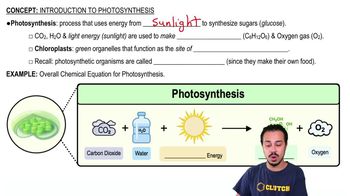
Photosynthesis is a process that uses sunlight to synthesize glucose from carbon dioxide and water, producing oxygen as a byproduct.
Photosynthesis occurs in the chloroplast, the organelle specialized for this process.
The reactants are carbon dioxide (CO2), water (H2O), and sunlight.
The chemical formula for glucose is C6H12O6.
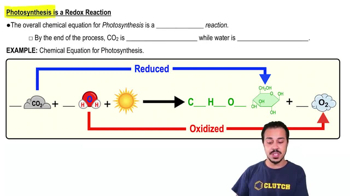
A redox reaction involves the transfer of electrons between two species, including oxidation and reduction.
Water (H2O) is oxidized and carbon dioxide (CO2) is reduced during photosynthesis.
Lose Electrons Oxidized, Gain Electrons Reduced, to remember redox reactions.
The products are glucose (C6H12O6) and oxygen (O2).
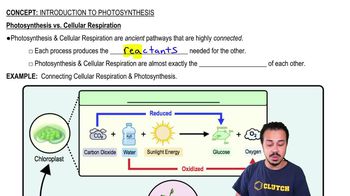
Cellular respiration converts glucose and oxygen into carbon dioxide, water, and ATP energy.
The products of one process serve as the reactants for the other, forming a complementary cycle.
The main energy source is sunlight.
The main energy product is ATP.
Mitochondria are the site where cellular respiration occurs.
The byproduct is oxygen (O2).
The byproducts are carbon dioxide (CO2) and water (H2O).
Photo refers to light, such as sunlight.
Synthesis means the ability to build or create something, like glucose.
6CO2 + 6H2O + sunlight → C6H12O6 + 6O2
C6H12O6 + 6O2 → 6CO2 + 6H2O + ATP
Oxygen (O2) is the final electron acceptor in cellular respiration.
Photosynthesis transforms energy and cycles matter, providing food and oxygen essential for life.
Water is oxidized to produce oxygen and provides electrons for the process.
Carbon dioxide is reduced to form glucose.
To convert solar energy into chemical energy stored in glucose.
To convert chemical energy in glucose into usable ATP energy.