 Indietro
Chemical Basis of Life - General Biology
 02:13
02:13
Termini in questo insieme (20)
Carbon, hydrogen, oxygen, and nitrogen are the four most abundant elements in living organisms.
An atom is the smallest unit of matter that retains the properties of an element.
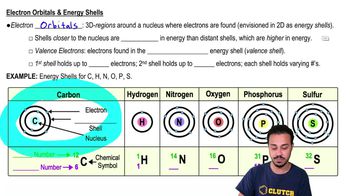
Atoms are made up of protons, neutrons, and electrons.
Protons are positive, neutrons are neutral, and electrons are negative.
An element is a pure substance made of only one kind of atom.
An isotope is an atom of the same element with different numbers of neutrons.
A molecule is two or more atoms chemically bonded together.
A compound is a molecule made of atoms of different elements.
A covalent bond is a chemical bond where atoms share electrons.
An ionic bond is a chemical bond formed by the transfer of electrons between atoms.
A hydrogen bond is a weak attraction between a hydrogen atom and an electronegative atom.
Water is a polar molecule that dissolves many substances and supports chemical reactions in cells.
Polarity means a molecule has a partial positive and partial negative charge due to unequal electron sharing.
pH measures the concentration of hydrogen ions (\(H^+\)) in a solution.
Acidic is pH < 7, neutral is pH = 7, and basic is pH > 7.
Macromolecules are large molecules essential for life, including carbohydrates, lipids, proteins, and nucleic acids.
Carbohydrates are made of carbon, hydrogen, and oxygen, usually in a 1:2:1 ratio.
Lipids store energy and make up cell membranes.
Proteins are made of amino acids linked by peptide bonds.
Nucleic acids store and transmit genetic information.