Typological thinking assumes species are specially created, variation is unimportant, and species do not change over time.
Uniformitarianism (Charles Lyell)
Uniformitarianism is the idea that geological processes are slow, steady, and ongoing, implying the Earth is very old.
Lamarck's Theory of Evolution
Lamarck proposed that species adapt to their environment and pass on acquired characteristics to offspring, which is now known to be incorrect.
Population Thinking (Thomas Malthus)
Populations tend to increase, leading to competition for limited resources among individuals.
Darwin's Four Postulates
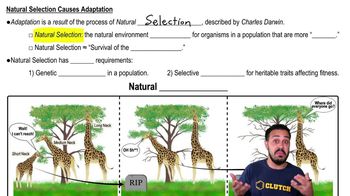
1. Variation exists in populations. 2. Some traits are heritable. 3. Survival and reproduction vary. 4. Individuals with advantageous traits survive and reproduce more.
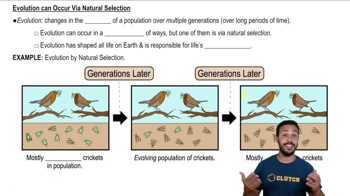
Natural Selection
Natural selection is the process where individuals with heritable traits that increase survival and reproduction become more common in a population.
Descent with Modification
The pattern of evolution where populations change over time, leading to species related by common ancestry.
Evidence for Evolution
Includes fossil records, species relatedness, and observed natural selection in populations.
Role of the HMS Beagle Voyage
Darwin collected specimens and made observations that helped him formulate his theory of evolution by natural selection.
Pocket Mice Coat Color Variation
Pocket mice in different habitats have coat colors matching their environment, aiding survival by camouflage.
Heritability of Coat Color in Pocket Mice
Coat color differences are controlled by specific genes and mutations; black fur is dominant to tan.
Survival and Reproductive Success in Pocket Mice
Many mice are eaten by predators; those with coat colors matching their habitat survive and reproduce better.
Experimental Approach to Study Natural Selection in Mice
Observe mice populations in different habitats and analyze genetic differences related to coat color.
Genotype to Phenotype Connection
Differences in DNA sequences lead to differences in proteins, which cause observable traits like coat color.
Scientific vs Religious Questions
Science asks questions answerable by evidence, such as fossil age; religion addresses social or philosophical questions.
Importance of Variation in Evolution
Variation among individuals is essential for natural selection to act upon.
Heritability in Evolution
Traits must be heritable for natural selection to cause evolutionary change.
Competition in Populations
Limited resources cause individuals to compete, influencing survival and reproduction.
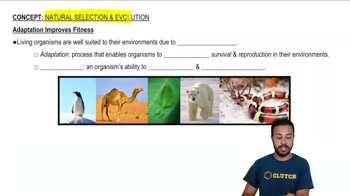
Adaptation
A trait that increases an individual's fitness in a particular environment.
Role of Mutation in Evolution
Mutations create genetic variation that can lead to new traits subject to natural selection.
 Indietro
 07:48