 Indietro
General Biology: Basic Chemistry Concepts
 02:13
02:13
Termini in questo insieme (41)
An atom is the smallest unit of matter that retains the properties of an element.
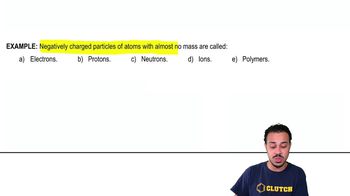
An electron is a negatively charged subatomic particle that orbits the nucleus of an atom.
A proton is a positively charged subatomic particle found in the nucleus of an atom.
A neutron is a neutrally charged subatomic particle found in the nucleus of an atom.
An ion is an atom or molecule with a net electric charge due to the loss or gain of one or more electrons.
A cation is a positively charged ion formed by the loss of electrons.
An anion is a negatively charged ion formed by the gain of electrons.
An ionic bond is a chemical bond formed by the attraction between oppositely charged ions.
A covalent bond is a chemical bond formed when two atoms share one or more pairs of electrons.
A polar covalent bond occurs when electrons are shared unequally between atoms, causing partial charges.
A nonpolar covalent bond occurs when electrons are shared equally between atoms.
A molecule is two or more atoms held together by covalent bonds.
A compound is a substance made of two or more different elements chemically combined in a fixed ratio.
The atomic number is the number of protons in an atom's nucleus and defines the element + it's properties.
The mass number is the total number of protons and neutrons in an atom's nucleus.
An isotope is an atom of the same element with different numbers of neutrons.
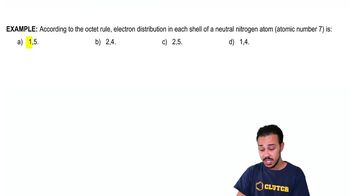
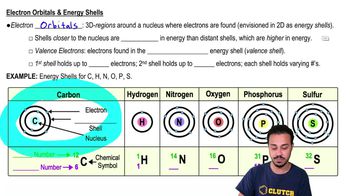
Valence electrons are the electrons in the outermost shell of an atom involved in chemical bonding.
An electron shell is a level of electrons surrounding the nucleus of an atom.
Octet
Octet means to gain stability; atoms lose or gain electrons to have eight electrons in their valence shell.
A hydrogen bond is a weak attraction between a hydrogen atom and an electronegative atom in another molecule.
Poles
Regions of a molecule that have high concentration of electrical charges, positive(+) or negative(-).
Duet
Molecules whose atoms only require 2 electrons
Five Themes of Biology
Structure = Functions at molecular and organismal level
Evolution
Flow of information(DNA+heredity)
Energy flows, matter cycles (life depends on this)
Life = Systems/Interactions inside and between
The scientific method
Observation
Question
Hypothesis
Prediction
Experiment/Data collection
Conclusion/claim
Recognition of life (Ex Viruses are NOT living bc they don't apply to all of these rules)
Order
Response to Environment
Regulation
Energy Processing
Adaptation
Reproduction + Growth
Emergent Properties
New properties that arise wth each new generation, from the arrangement and interactions of parts as complexity increases.
Structure + Function
All parts of an organism have a specific function that works because of it's structure.
Valence Shell/Core
Valence Shells are the outermost shells of an atom.
Cores are the inner ones.
Orbitals
Discrete volumes of space where electrons are most likely to be found.
Electronegativity
Measure of an atom's attraction for shared electrons.
Polar Molecule
A molecule with polar covalent bonds and has unequal distribution of charges in different regions of the molecule.
Chemical Reaction
The making and breaking of chemical bonds, leading to changes in the composition of matter. (Reactant + Reactant --> Product)
Cohesion/Adhesion
Cohesion is the tendency of molecules of the same kind to stick together
Adhesion is the clinging of one substance to another.
Ex: Bc of cohesion and adhesion, sweat 'beads' cling to your face.
Surface tension
A measure of how difficult it is to streatch of break the surface of a liquid.
Thermal Energy
Total kinetic energy due to random motion of atoms/molecules in a substance.
Evaporative cooling
The process in which the surface of an object cools during evaporation; result of molecule with the highest energy changing from liquid to gas.
Solution/Aqueous solution
A solution is a liquid consisting of a uniform mixture of 3 or more substances. An Aqueous solution is one where water is the solvent.
Solvent/Solute
The solvent is the dissolving agent, or the substance that is dissolving another. The solute is the substance being dissolved.
Acid/Base
Acids are substances that donate H+ to a solution.
Bases are substances that reduce the H+ concentration of a substance.
pH Scale
A measure of the acidity of a solution, ranging in value from 0(most acidic) to 14(most basic). The letters pH stand for potential hydrogen and refer to the concentration of hydrogen ions (H+).
Buffers
A chemical substance that minimizes changes in pH by accepting(taking) hydrogen ions from or donating hydrogen ions to solutions.