 Indietro
General Biology: Cell Organelles, Metabolism, and Enzymes
 03:16
03:16
Termini in questo insieme (37)
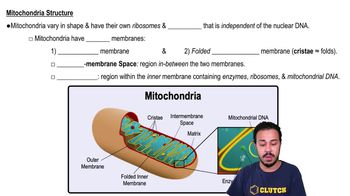
To produce ATP (usable cellular energy) through cellular respiration.
Cellular respiration
The main molecule cells use for immediate energy.
Adenosine triphosphate
Most eukaryotic cells, including plant and animal cells.
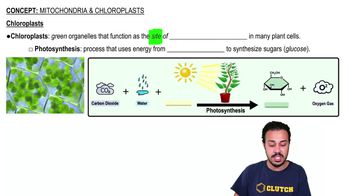
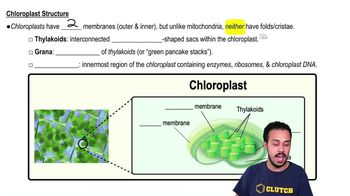
To capture light energy and use it to make sugars through photosynthesis.
Photosynthesis
Plants and many algae.
Chlorophyll
Chloroplasts capture and store energy in sugars; mitochondria release energy from food to produce ATP.
A process cells use to obtain energy from food molecules and produce ATP.
Energy stored in glucose is transferred into ATP during cellular respiration.
The total of all chemical reactions occurring in an organism or cell.
A series of chemical reactions where the product of one reaction becomes a reactant for the next.
Catabolic and anabolic pathways.
A pathway that breaks molecules down and can release energy.
A pathway that builds larger molecules and requires energy.
Catabolic because molecules like glucose are broken down.
Anabolic because smaller amino acids are joined to build a larger molecule.
The capacity to cause change or do work.
Energy associated with motion.
Stored energy due to position or structure.
Potential energy stored in the chemical bonds or structure of molecules.
For processes such as transport, movement, growth, repair, and building molecules.
A biological catalyst that speeds up a chemical reaction.
Proteins
The energy needed to start a chemical reaction.
They lower activation energy.
No. It can be reused.
The molecule that an enzyme acts on.
The region of an enzyme where the substrate binds.
An enzyme-substrate complex forms.
Yes. An enzyme generally works with a particular substrate or type of reaction.
Temperature, pH, substrate concentration, and inhibitors or activators.
Its shape and activity can change; severe disruption can cause denaturation.
A change in a protein's shape that can cause it to lose its function.
Its shape allows the correct substrate to interact with its active site.