 Indietro
General Biology: Cell Structure and Function
 06:35

Termini in questo insieme (24)
All living things are composed of cells, the cell is the basic unit of life, and new cells arise from existing cells.
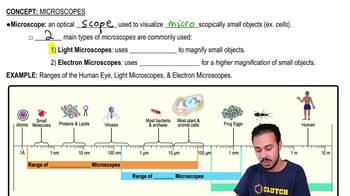
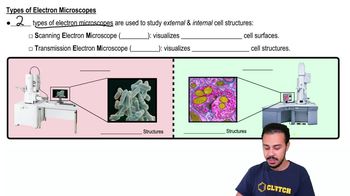
Light microscopes magnify up to 1000X and view living cells; electron microscopes magnify up to 100,000X and view dead specimens' structures.
All cells have DNA, ribosomes for protein synthesis, cytoplasm, and a cell membrane.
Cells without membrane-bound organelles; example: bacteria.
Cells with membrane-bound organelles and a plasma membrane; examples: animal and plant cells.
Composed of phospholipids and proteins, it regulates substances entering and leaving the cell and protects the cell.
Made of cellulose, it supports and protects plant cells.
Composed of water and molecules; site of enzyme reactions inside the cell.
A network of protein fibers that support cell shape and anchor organelles; fibers constantly form and disassemble.
The control center regulating cell metabolism; contains chromosomes with DNA and the nucleolus which produces ribosomes.
Rough ER synthesizes proteins; smooth ER synthesizes lipids; both transport products in vesicles.
Modifies, packages, and ships proteins and lipids from the ER to other parts of the cell.
Vesicles containing digestive enzymes that break down food and worn-out organelles.
Double-membrane sacs that metabolize glucose and produce ATP, the cell's energy currency.
Organelles in plant cells where photosynthesis converts sunlight, CO2, and water into glucose.
Composed of rRNA and proteins; assemble amino acids into proteins during protein synthesis.
Cylinders made of microtubules that help organize the mitotic spindle during cell division; found in animal cells.
Structures inside the nucleus made of DNA and proteins that carry genetic information passed to offspring.
Plant cells have a cell wall made of cellulose; animal cells do not.
Plant cells contain chloroplasts for photosynthesis; animal cells lack chloroplasts.
Plant cells have a large central vacuole for storage and shape; animal cells have small or no vacuoles.
Animal cells contain centrioles and lysosomes; plant cells usually lack these organelles.
Stores nutrients, waste, and water; helps maintain cell shape.
Protein is synthesized in the rough ER, modified in the Golgi apparatus, and transported in vesicles to the cell membrane for secretion.