Surface to volume ratio limits cell size because volume increases faster than surface area, reducing nutrient exchange efficiency and causing cells to divide.
Basic features of all cells
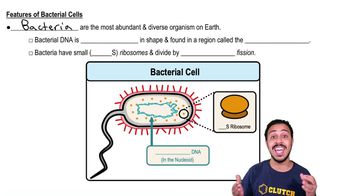
All cells have a plasma membrane, cytosol, chromosomes (genetic material), and ribosomes (protein factories).
Plasma membrane structure
The plasma membrane is a phospholipid bilayer with hydrophobic centers and hydrophilic surfaces, containing embedded proteins and glycoproteins.
Difference between prokaryotic and eukaryotic cells
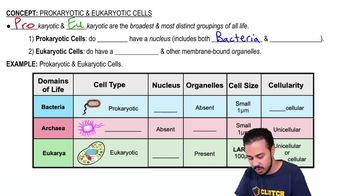
Prokaryotic cells lack a membrane-bound nucleus; DNA is concentrated in one area. Eukaryotic cells have a nucleus enclosed by a double membrane.
Nucleus function
The nucleus protects chromosomes within a double phospholipid bilayer and organizes genetic material wrapped around histone proteins.
Ribosomes role
Ribosomes synthesize proteins; they can be free in the cytosol or bound to the rough endoplasmic reticulum.
Endomembrane system components
Includes plasma membrane, nuclear envelope, endoplasmic reticulum, Golgi apparatus, lysosomes, and vacuoles, connected by membrane-bound vesicles.
Rough Endoplasmic Reticulum (Rough ER)
Rough ER has ribosomes and functions in protein synthesis, membrane production, and enzyme synthesis.
Smooth Endoplasmic Reticulum (Smooth ER)
Smooth ER lacks ribosomes and functions in lipid synthesis, carbohydrate metabolism, detoxification, and calcium storage.
Golgi apparatus function
The Golgi apparatus modifies, processes, stores, and ships proteins and lipids received from the ER via vesicles.
Lysosomes function
Lysosomes contain digestive enzymes that break down food, unwanted materials, and cellular debris.
Vacuoles in plant cells
Plant cells have a large central vacuole for storing water, potassium, and chloride; vacuoles generally serve as storage centers.
Mitochondria function
Mitochondria perform cellular respiration, converting oxygen and food into ATP, the cell's usable energy.
Chloroplasts function
Chloroplasts perform photosynthesis, converting sunlight into simple sugars for food energy.
Origin of mitochondria and chloroplasts
Both organelles originated from independent prokaryotic cells engulfed by ancestral eukaryotic cells, becoming permanent symbionts.
Cytoskeleton functions
The cytoskeleton organizes the cell, maintains shape, and moves materials; it consists of microtubules, microfilaments, and intermediate filaments.
Microtubules
Hollow tubes made of tubulin; involved in cell shape, motility, organelle movement, and chromosome separation during cell division.
Microfilaments (Actin filaments)
Thin fibers made of actin; support cell shape, muscle contraction, cell motility, cytoplasmic streaming, and cell division.
Intermediate filaments
Fibers made mainly of keratin; provide structural support, anchor organelles, bear tension, and maintain cell shape.
Cell junctions in plants
Plasmodesmata are channels spanning cell walls and membranes, allowing communication and material exchange between plant cells.
Cell junctions in animals
Include tight junctions (seal cells), desmosomes (anchor cells), and gap junctions (channels for communication and material exchange).
 Indietro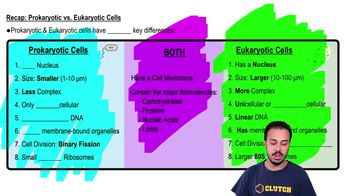
 04:26
04:26