Skip to main content
General Biology
Il mio corso
Impara
Preparazione agli esami
AI Tutor
Guide di studio
Soluzioni per libri di testo
Flashcard
Esplora
Prova l'app
Il mio corso
Impara
Preparazione agli esami
AI Tutor
Guide di studio
Soluzioni per libri di testo
Flashcard
Esplora
Prova l'app
Indietro
General Biology: Cell Structure and Function (Chapters 6.1-6.4)
Puoi toccare per girare la carta.
How do biologists study cells?
Puoi toccare per girare la carta.
👆
How do biologists study cells?
Biologists use
microscopes
to observe cell structures and
biochemistry
to analyze cellular molecules and processes.
Avanzamenti del tracciato
I pulsanti di controllo sono stati cambiati in modalità "navigazione".
1/20
Video consigliati
06:35
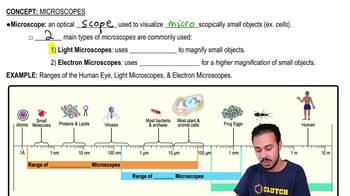
Microscopes
24816
views
567
rank
02:52
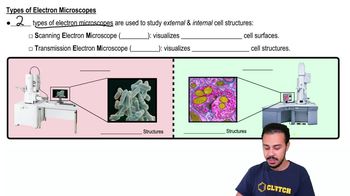
Types of Electron Microscopes
17809
views
356
rank
1
comments
Termini in questo insieme (20)
Nascondere definizioni
How do biologists study cells?
Biologists use
microscopes
to observe cell structures and
biochemistry
to analyze cellular molecules and processes.
What is the main advantage of internal membranes in eukaryotic cells?
Internal membranes
compartmentalize
cell functions, allowing specialized environments and efficient biochemical processes.
Where are the genetic instructions of a eukaryotic cell located?
The genetic instructions are housed in the
nucleus
of the eukaryotic cell.
What role do ribosomes play in the cell?
Ribosomes
carry out
the genetic instructions by synthesizing proteins.
What is the endomembrane system?
The endomembrane system is a group of membranes that
regulate protein traffic
and perform various metabolic functions.
Name key components of the endomembrane system.
Key components include the
nuclear envelope
,
endoplasmic reticulum
,
Golgi apparatus
,
lysosomes
, and
vesicles
.
How does the nuclear envelope relate to the endomembrane system?
The nuclear envelope is part of the endomembrane system and separates the nucleus from the cytoplasm.
What is the function of the rough endoplasmic reticulum (ER)?
The rough ER has ribosomes on its surface and
synthesizes proteins
destined for membranes or secretion.
What is the function of the smooth endoplasmic reticulum (ER)?
The smooth ER
lacks ribosomes
and is involved in lipid synthesis and detoxification.
What role does the Golgi apparatus play in the cell?
The Golgi apparatus
modifies, sorts, and ships
proteins and lipids received from the ER.
How do lysosomes contribute to cellular function?
Lysosomes contain enzymes that
digest macromolecules
and recycle cellular components.
What is the significance of compartmentalization in eukaryotic cells?
Compartmentalization allows different cellular processes to occur simultaneously in specialized environments.
How do ribosomes differ in location and function?
Ribosomes can be
free in the cytoplasm
or
bound to the rough ER
, producing proteins for different destinations.
What is the relationship between the nucleus and ribosomes?
The nucleus contains DNA that encodes proteins, and ribosomes translate this information into proteins.
How does the endomembrane system regulate protein traffic?
Proteins are synthesized in the rough ER, processed in the Golgi, and transported via vesicles to their destinations.
Why is the study of cells important in biology?
Cells are the basic units of life, and understanding their structure and function explains how organisms live and function.
What tools are essential for studying cell structure?
Microscopes, especially electron microscopes, are essential for visualizing detailed cell structures.
What biochemical methods help study cells?
Biochemical methods analyze molecules like proteins, lipids, and nucleic acids to understand cell function.
How does the endomembrane system perform metabolic functions?
It synthesizes, modifies, and transports molecules, and breaks down waste and toxins.
What is the role of vesicles in the endomembrane system?
Vesicles transport materials between organelles and to the cell surface.
 IndietroIndietro
 06:35