 Indietro
General Biology: Cellular Reproduction
 04:45

Termini in questo insieme (35)
Chromosomes
Double helix
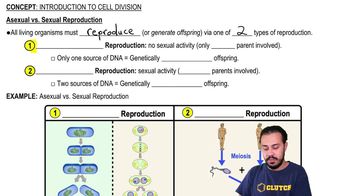
Genetically identical daughter cells
Differentiation
a. Stem cells
b. Progenitor cells
c. Differentiated cells
The fusion of gametes (sperm and egg)
Offspring called clones
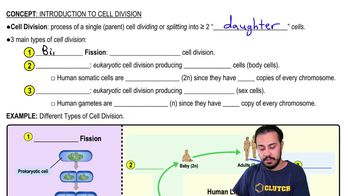
Binary fission
Histones
Centromere
The ends of chromosomes
G1: Cell growth
S: DNA replication
G2: Preparation for mitosis
The nucleus
The cytoplasm
Four genetically unique haploid daughter cells
Chromosomes condense and spindle fibers form
Chromosomes align at the cell's equator
Sister chromatids separate and move to opposite poles
Chromosomes decondense and nuclear membranes reform
The cytoplasm divides, forming two separate cells
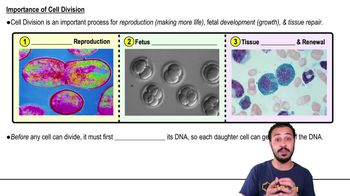
Mitosis produces new cells to replace damaged skin cells
Tattoo ink is deposited in deeper skin layers where cells divide less frequently
Muscle repair involves stem cells and protein synthesis, not cell division
Hair follicle stem cells
Stress can weaken the immune system, reducing its effectiveness
Excessive skin cell division can clog pores, leading to acne
Cell division rates decrease and differentiation stabilizes
Uncontrolled cell division can lead to cancer
Bacteria reproduce rapidly by binary fission under favorable conditions
Genetic variation arises from meiosis and independent assortment
Telomere
Centromere
Histones
Interphase
Cytokinesis