 Indietro
General Biology: Cellular Respiration and Metabolism
 01:53

Termini in questo insieme (28)
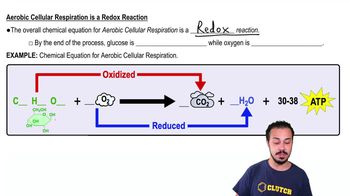
Redox reactions involve the transfer of electrons between molecules; oxidation is loss of electrons, reduction is gain of electrons.
An oxidizing agent accepts electrons and is reduced in a redox reaction.
A reducing agent donates electrons and is oxidized in a redox reaction.
ATP (adenosine triphosphate) is the main energy currency of the cell, storing and transferring energy.
Chemiosmosis is the process where ATP is produced using the energy of a proton gradient across a membrane.
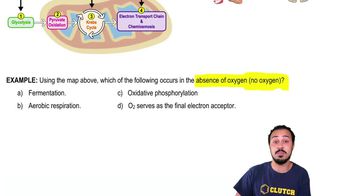
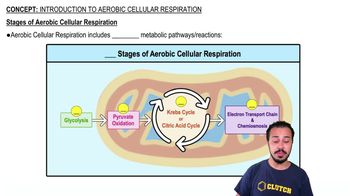
Aerobic respiration is cellular respiration that requires oxygen to produce ATP.
Substrate-level phosphorylation is the direct synthesis of ATP by transferring a phosphate group to ADP from a phosphorylated intermediate.
Oxidative phosphorylation produces ATP using energy from electrons transferred through the electron transport chain and chemiosmosis.
The mitochondrion is the organelle where aerobic respiration occurs, producing most of the cell's ATP.
The outer membrane encloses the organelle; the inner membrane is folded into cristae and houses the electron transport chain.
Cristae are folds of the inner mitochondrial membrane that increase surface area for ATP production.
The mitochondrial matrix is the space inside the inner membrane where the Krebs cycle occurs.
The intermembrane space is the area between the inner and outer mitochondrial membranes where protons accumulate during electron transport.
Cofactors are non-protein chemical compounds that assist enzyme function.
Coenzymes are organic cofactors, often electron carriers like NAD+ and FAD, that help enzymes catalyze reactions.
Electron carriers transport electrons during cellular respiration, e.g., NAD+ and FAD.
Glycolysis inputs: glucose; outputs: 2 pyruvate, 2 ATP (net), and 2 NADH molecules.
Krebs cycle inputs: acetyl-CoA; outputs: CO2, NADH, FADH2, and ATP (or GTP).
The ETC is a series of protein complexes that transfer electrons to oxygen, pumping protons to create a gradient for ATP synthesis.
A proton pump uses energy from electrons to move protons into the intermembrane space, creating a proton gradient.
ATP synthase is an enzyme that synthesizes ATP as protons flow back into the mitochondrial matrix through it.
Fermentation is an anaerobic process that regenerates NAD+ by converting pyruvate into lactic acid or alcohol.
Lactic acid fermentation converts pyruvate into lactic acid, regenerating NAD+ without oxygen.
Alcoholic fermentation converts pyruvate into ethanol and CO2, regenerating NAD+ anaerobically.
Aerobic organisms require oxygen for cellular respiration.
Anaerobic organisms do not require oxygen and may use fermentation or anaerobic respiration.
Obligate anaerobes cannot survive in the presence of oxygen.
Facultative anaerobes can survive with or without oxygen, switching between aerobic respiration and fermentation.