 Indietro
General Biology: Cellular Respiration, Photosynthesis, and Cell Division
 01:44

Termini in questo insieme (28)
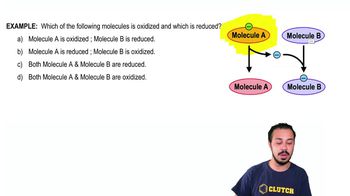
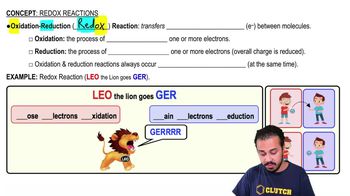
Electrons are transferred between molecules, changing their oxidation states. Oxidation is loss of electrons; reduction is gain of electrons, affecting potential energy.
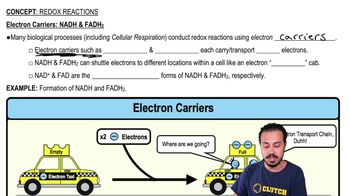
NAD+ is the oxidized form that accepts electrons and a proton to become NADH, the reduced form carrying high-energy electrons.
Reactants: Glucose and ATP; Products: Pyruvate, ATP, and NADH.
ATP is produced by substrate-level phosphorylation, transferring a phosphate group directly to ADP from a phosphorylated intermediate.
Glycolysis, Pyruvate oxidation, Krebs cycle, and Electron Transport Chain with oxidative phosphorylation.
Direct synthesis of ATP by transferring a phosphate group from a substrate molecule to ADP during glycolysis and Krebs cycle.
Only about 10% of total ATP is formed by substrate-level phosphorylation; most is made by oxidative phosphorylation.
Movement of H+ ions down their gradient through ATP synthase, producing ATP as protons flow from the intermembrane space back into the mitochondrial matrix.
In photosynthesis, protons flow from the stroma into the thylakoid lumen, then back through ATP synthase to the stroma, opposite to mitochondria.
Reactants: Acetyl-CoA; Products: CO2, NADH, FADH2, and ATP (or GTP).
Reactants: Light, water; Products: ATP, NADPH, and O2.
Reactants: CO2, ATP, NADPH; Products: Glucose (G3P) and ADP, NADP+.
Chloroplasts have thylakoid membranes where light reactions occur and the stroma where the Calvin cycle takes place.
Water is oxidized to O2; CO2 is reduced to glucose.
Interphase (G0, G1, S, G2 phases) followed by Mitosis and Cytokinesis.
Cells exit the cycle and do not divide; they are metabolically active but not preparing for division.
DNA replication occurs, duplicating chromosomes into sister chromatids.
Sister chromatids are identical copies of a chromosome joined at the centromere.
Chromatin condenses into visible chromosomes; spindle fibers form; nuclear envelope breaks down.
Chromosomes align at the cell's equator (metaphase plate) attached to spindle fibers.
Sister chromatids separate and move toward opposite poles of the cell.
Chromosomes decondense; nuclear envelopes reform around each set of chromosomes.
Animal cells form a cleavage furrow; plant cells build a cell plate to divide the cytoplasm.
Asexual reproduction passes identical DNA to offspring; sexual reproduction combines DNA from two parents, increasing genetic diversity.
Cells become haploid at the end of Meiosis I after homologous chromosomes separate.
Sister chromatids separate during Meiosis II, similar to mitosis.
Exchange of genetic material between homologous chromosomes during Prophase I of meiosis, increasing genetic variation.
Meiosis produces 1 ovum and 3 polar bodies in females; 4 sperm cells in males.