 Indietro
General Biology: Cellular Structure and Functions
 04:26
04:26
Termini in questo insieme (30)
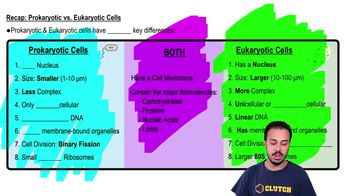
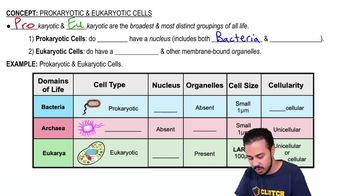
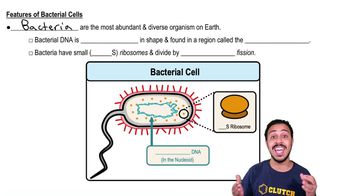
Prokaryotic cells are simpler, smaller, and lack a nucleus; eukaryotic cells are larger, more complex, and have a nucleus and internal membranes.
Internal membranes compartmentalize cellular functions, allowing specialized environments for different processes.
Most genetic material is in the nucleus, but some DNA is also found in mitochondria and chloroplasts.
The nuclear membrane is a double membrane with pores that encloses the nucleus and regulates passage of materials.
Chromatin is the relaxed form of DNA and proteins; chromosomes are condensed chromatin visible during cell division.
The nucleus disassembles during cell division to allow chromosome separation and then reforms afterward.
Ribosomes synthesize proteins by translating mRNA into polypeptide chains.
Ribosomes are found free in the cytoplasm and attached to the rough endoplasmic reticulum.
Hair cells produce more proteins, so they have more ribosomes for increased protein synthesis.
Includes the nuclear envelope, endoplasmic reticulum, Golgi apparatus, lysosomes, vacuoles, and plasma membrane.
The RER assembles proteins destined for secretion or membrane insertion.
The SER synthesizes lipids, detoxifies chemicals, and stores calcium ions.
The Golgi apparatus modifies, sorts, and packages proteins and lipids for transport.
They store and transport materials within the cell; lysosomes are specialized vesicles containing digestive enzymes.
Mitochondria and chloroplasts have bacterial origins, supporting the endosymbiont theory.
Mitochondria produce ATP via cellular respiration; folds (cristae) increase surface area for energy production.
Types include chloroplasts (photosynthesis), chromoplasts (pigment synthesis), and leucoplasts (storage).
Grana are stacks of thylakoids, which contain chlorophyll; stroma is the fluid surrounding thylakoids where the Calvin cycle occurs.
Peroxisomes break down fatty acids and detoxify harmful substances by producing hydrogen peroxide.
The cytoskeleton maintains cell shape, organizes organelles, and facilitates cell movement.
Includes microtubules, microfilaments (actin filaments), and intermediate filaments.
Motor proteins move along cytoskeletal fibers carrying cellular cargo using ATP energy.
Centrosomes contain centrioles that organize microtubules during cell division.
Allows rapid assembly of microtubules without synthesizing new proteins each time.
Both have a 9+2 arrangement of microtubules; cilia are short and numerous, flagella are longer and fewer.
Smoke reduces cilia activity, impairing mucus clearance and causing coughing and lung disease.
Cytoplasmic streaming is the directed flow of cytoplasm facilitated by actin filaments for material distribution.
The cell wall is a rigid outer layer in plants that provides support and protection.
The extracellular matrix is a network of proteins outside animal cells that supports and regulates cell behavior.
Tight junctions seal cells in animal tissues; desmosomes anchor cells; gap junctions allow communication; plasmodesmata connect plant cells.