 Indietro
General Biology Chapter 2 Study Guide
 02:13

Termini in questo insieme (32)
A trace element is a chemical element required by an organism in only minute quantities.
An atom is the smallest unit of matter that retains the properties of an element, composed of protons, neutrons, and electrons.
A proton is a positively charged subatomic particle found in the nucleus of an atom.
A neutron is a neutrally charged subatomic particle found in the nucleus of an atom.
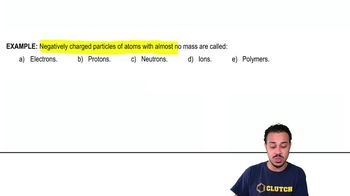
An electron is a negatively charged subatomic particle that orbits the nucleus in electron shells.
The nucleus is the dense central core of an atom containing protons and neutrons.
The atomic number is the number of protons in an atom's nucleus and defines the element.
The mass number is the total number of protons and neutrons in an atom's nucleus.
An isotope is an atom of the same element with different numbers of neutrons.
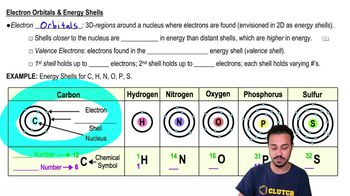
Electron shells are energy levels where electrons orbit the nucleus; the outermost shell is the valence shell which determines chemical bonding.
A covalent bond is a chemical bond formed by the sharing of electron pairs between atoms.
An ionic bond is a chemical bond formed by the attraction between oppositely charged ions.
Electronegativity is the tendency of an atom to attract electrons in a chemical bond.
Polar covalent bonds have unequal sharing of electrons causing partial charges; nonpolar covalent bonds share electrons equally.
In polar molecules, atoms with higher electronegativity have a partial negative charge, while others have a partial positive charge.
A hydrogen bond is a weak attraction between a hydrogen atom in one molecule and an electronegative atom in another.
Reactants are substances that start a chemical reaction; products are substances formed by the reaction.
Cohesion is the attraction between like molecules; adhesion is the attraction between different molecules.
A solution is a homogeneous mixture; the solvent dissolves the solute.
Acids increase H+ concentration; bases increase OH- concentration; the pH scale measures acidity from 0 (acidic) to 14 (basic), with 7 neutral.
An atom consists of a nucleus with positively charged protons and neutral neutrons, surrounded by negatively charged electrons in shells.
Isotopes differ in neutron number; ions form when atoms gain or lose electrons, acquiring charge.
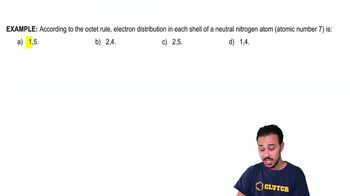
The first electron shell holds up to 2 electrons; the second and third shells hold up to 8 electrons each.
Covalent bonds share electrons; ionic bonds transfer electrons creating charged ions.
Differences in electronegativity between atoms cause unequal electron sharing, resulting in polar covalent bonds.
Water is polar due to unequal electron sharing; hydrogen bonds form between water molecules, giving water unique properties.
Lower pH means higher H+ concentration (acidic); higher pH means higher OH- concentration (basic); pH 7 is neutral.
Sulfur (atomic number 16) has 16 protons and electrons; neutrons vary by isotope; protons and neutrons are in the nucleus.
The first shell holds 2 electrons; the second shell holds up to 8 electrons, totaling 10 electrons in two shells.
Carbon has 4 valence electrons and can form 4 covalent bonds to complete its valence shell.
Reactants: C6H12O6 + 6O2; Products: 6CO2 + 6H2O in cellular respiration.
Most acidic: lemon juice (pH 2); most basic: bleach (pH 12); neutral: water (pH 7); acidity relates to H+ concentration.