 Indietro
General Biology: Characteristics of Life, Evolution, and Scientific Inquiry
 02:09
02:09

Termini in questo insieme (20)
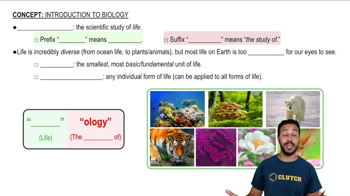
Biology is the scientific study of life, focusing on millions of organisms on Earth and their interactions.
What are the 6 characteristics of living things?
composed of cells 2. grow and develop 3. regulate metabolic processes 4. respond to stimuli 5. reproduce 6. adapt to the environment.
The cell theory states that cells are the basic unit of life, organisms are made of cells, and all cells come from preexisting cells.
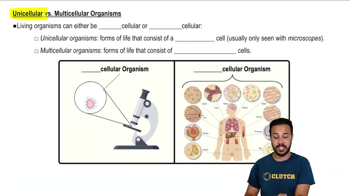
Unicellular organisms consist of one cell performing all life functions; multicellular organisms have specialized cells performing specific functions.
Growth is an increase in cell number or size; development produces defined characteristics and changes over time.
Metabolism is the sum of all chemical reactions in an organism, essential for nutrition, growth, repair, and energy conversion.
Homeostasis is the self-regulation of internal conditions to maintain a balanced, stable environment.
Organisms respond to physical stimuli like light, temperature, pressure, and chemical stimuli such as soil or water composition.
Adaptations are short- or long-term processes and structures that help organisms adjust to environmental changes.
Asexual reproduction produces exact copies by DNA replication and division; sexual reproduction involves fusion of egg and sperm, increasing genetic diversity.
Biological evolution is the change in populations over many generations, leading to adaptations to the environment.
Natural selection is the mechanism of evolution where individuals with favorable traits survive and reproduce, passing traits to the next generation.
Individuals vary, produce more offspring than survive, favorably adapted survive and reproduce, and successful organisms pass on traits.
Atoms form molecules, molecules form cells, cells form tissues, tissues form organs, organs form organ systems, and organ systems form organisms.
Population: members of one species in an area; Community: populations interacting; Ecosystem: community plus nonliving environment; Biosphere: all Earth's ecosystems.
Steps include observation, hypothesis formation, experimentation, data collection, and conclusion to test explanations.
A hypothesis is a tentative, testable, and falsifiable explanation for an observed phenomenon.
A hypothesis is a testable prediction; a theory is an integrated explanation supported by many observations and experiments.
Camouflage helps organisms blend with their environment, reducing predation and increasing survival.
Cystic fibrosis is a genetic disorder causing thick mucus that obstructs lungs and pancreas, due to defective chloride ion transport proteins.