 Indietro
General Biology: Chemical Basis of Life and Macromolecules
 02:13
02:13
Termini in questo insieme (30)
Matter is anything that has mass and takes up space.
An element is a substance that cannot be broken down into simpler substances by ordinary chemical reactions.
An atom is the smallest unit of an element that retains its properties.
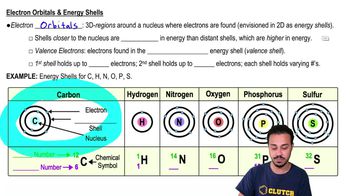
Protons, neutrons, and electrons.
A proton has a positive (+) charge.
A neutron has no charge (neutral).
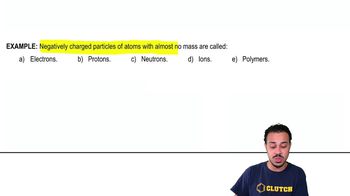
An electron has a negative (−) charge.
In the nucleus of an atom.
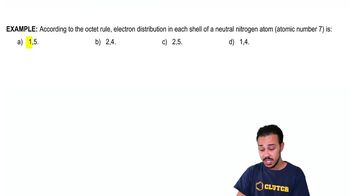
In regions surrounding the nucleus called electron shells or energy levels.
A molecule is two or more atoms held together by chemical bonds.
A compound is a substance containing two or more different elements combined in a fixed ratio.
A chemical bond is an attraction that holds atoms together.
A covalent bond is formed when atoms share electrons.
An ionic bond is an attraction between oppositely charged ions.
An ion is an atom or molecule with a net electrical charge.
The chemical formula for water is H₂O.
Water is polar.
Polar means the molecule has an uneven distribution of charge.
Hydrogen bonds occur between water molecules.
Cohesion is the attraction between molecules of the same substance, such as water molecules.
Adhesion is the attraction between different substances.
Because water has a high specific heat.
Its polarity allows it to dissolve many ionic and polar substances.
A solution is a uniform mixture in which one or more substances are dissolved.
The solvent is the substance that does the dissolving.
The solute is the substance that is dissolved.
pH measures how acidic or basic a solution is.
A neutral pH is 7.
An acidic pH is below 7.
A basic pH is above 7.