 Indietro
General Biology: Chemical Basis of Life and Macromolecules
 02:13
02:13
Termini in questo insieme (29)
Matter is anything that occupies space and has mass, existing in solid, liquid, or gas states.
Element: a substance that cannot be broken down by normal chemical means.
Compound: a substance made of two or more elements combined in a fixed ratio with different properties than its elements.
O, C, H, N (96% of living matter) plus P and Ca, which are major components of bones and teeth.
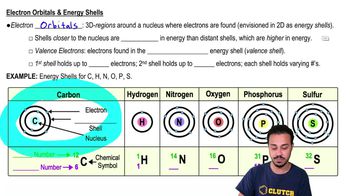
Its electrons, especially the valence electrons in the outermost shell.
Atoms of the same element with the same number of protons but different numbers of neutrons.
Transfer of electrons from one atom to another, creating oppositely charged ions that attract each other.
Sharing of electrons between atoms to fill their valence shells.
Nonpolar: electrons shared equally.
Polar: electrons pulled closer to the more electronegative atom, creating partial charges.
A weak bond involving hydrogen attracted to oxygen or nitrogen in polar molecules.
Hydrogen bonds form a 3D crystal that spaces molecules farther apart, making ice less dense than liquid water.
A substance that minimizes pH changes by accepting or donating H+ ions.
A carbon-based molecule, usually also containing hydrogen.
Specific clusters of atoms attached to carbon skeletons that determine chemical behavior.
Dehydration reaction: monomers are linked by removing a water molecule.
Hydrolysis: polymers are broken down by adding water.
Monosaccharides, such as glucose, fructose, and galactose.
Starch (plant energy storage), glycogen (animal energy storage), cellulose (plant cell wall structure).
Saturated fats have no double bonds and are solid at room temperature; unsaturated fats have double bonds causing kinks and are liquid.
Glycerol + 2 fatty acids + phosphate head; form bilayers with hydrophilic heads facing water and hydrophobic tails inside, making cell membranes.
Primary: amino acid sequence.
Secondary: alpha helices and beta sheets from backbone hydrogen bonds.
Tertiary: 3D folding from R group interactions.
Quaternary: assembly of multiple polypeptide chains.
Heat, pH changes, or salt disrupt protein shape and function.
A five-carbon sugar, a phosphate group, and a nitrogenous base.
DNA has thymine (T); RNA has uracil (U) instead of thymine.
Reactants: 6 CO2 + 6 H2O; Products: C6H12O6 + 6 O2; powered by sunlight.
Because small changes can be fatal; buffers maintain pH near 7.4 by accepting or donating H+.
An atom's attraction for shared electrons in a covalent bond.
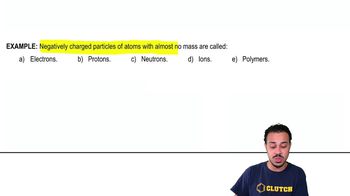
An atom with an electrical charge due to gain or loss of electrons.
Molecules of the same kind sticking together via hydrogen bonds.
The hottest molecules evaporate first, lowering the average temperature of the remaining liquid.