 Indietro
General Biology: Ecology, Evolution, and Biomes
 07:48

Termini in questo insieme (28)
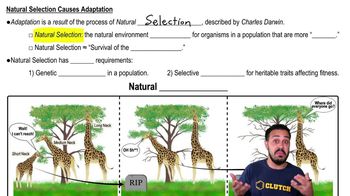
1) Individuals within populations vary in their traits.
2) Species produce more offspring than the environment can support, leading to competition.
1) Individuals with favorable inherited traits produce more offspring.
2) This leads to accumulation of favorable traits in populations over generations.
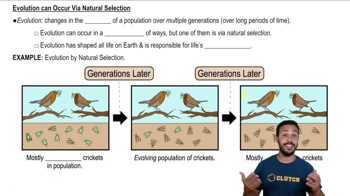
Natural selection acts on individuals, but populations evolve over generations as adaptive traits become more common.
Organismal ecology studies evolutionary adaptations of individuals to abiotic factors.
Population ecology studies factors affecting population density and growth of species groups.
Studies interactions between species, such as predation and competition, and their effects on community structure.
Study of interactions between organisms in a community and abiotic factors in their environment, focusing on energy flow and chemical cycling.
Abiotic factors are nonliving (temperature, light, water).
Biotic factors are living components of the environment.
Solar energy powers photosynthesis, providing organic fuel and building materials for most ecosystems.
Mechanisms to conserve water, such as water-storing tissues in plants and behavioral adaptations in animals.
A major terrestrial or aquatic life zone characterized by vegetation type or physical environment.
Freshwater biomes have salt concentration less than 1%, marine biomes around 3%.
Zone where light is available for photosynthesis, including shallow water near shore and upper layers away from shore.
Microscopic algae and cyanobacteria that perform photosynthesis and form the base of aquatic food webs.
Temperature and rainfall patterns, influenced by solar energy and Earth's movement, determine biome types.
Warm air at the equator rises, cools, forms clouds, and causes heavy rainfall due to moisture condensation.
Warm year-round, high rainfall, layered vegetation with a closed canopy and diverse habitats.
Loss of leaves reduces water loss when soil water is frozen and unavailable.
The global ecosystem, sum of all planet’s ecosystems including all life and where it lives.
Pollution from nitrogen and phosphorus runoff, industrial wastes, overuse of groundwater, and drought threaten freshwater habitats.
Greenhouse gases trap heat in the atmosphere by absorbing and reflecting heat energy, warming Earth.
Burning fossil fuels such as oil, coal, and natural gas.
Species ranges shift toward poles or higher elevations as temperatures rise due to global warming.
Warmer temperatures allow beetles to reproduce more, causing outbreaks that kill drought-stressed trees and increase wildfire risk.
A reversible physiological adjustment to environmental changes within an individual’s lifetime.
Physiological: internal adjustments; Anatomical: body structure changes; Behavioral: moving or changing actions.
They climb to reach sunlight above the dense canopy where light is limited near the ground.
Number of individuals of a species living in a given area.
Rate at which new individuals are added to a population.