 Indietro
General Biology: Energy, Cell Division, Genetics, and DNA
 04:21

Termini in questo insieme (30)
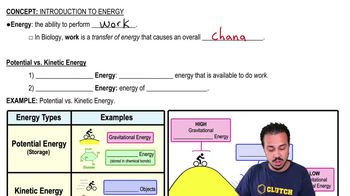
Energy is the capacity to do work or cause change, required for all cellular processes.
Potential energy is stored energy (e.g., in chemical bonds), while kinetic energy is energy of motion (e.g., muscle contraction).
ATP (adenosine triphosphate) is the cell's energy currency; breaking its bonds releases energy to drive cellular processes.
Energy can be converted but not created or destroyed; some energy is lost as heat during conversions.
Entropy is the amount of disorder or randomness; living things must work to counteract entropy.
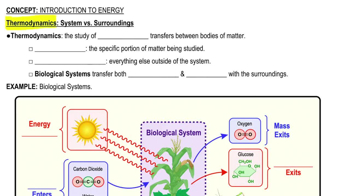
Energy flows through ecosystems, mostly powered by the sun, which provides energy for photosynthesis.
Producers convert solar energy to chemical energy via photosynthesis; consumers obtain energy by eating producers.
Inputs: H2O and CO2; Outputs: O2 and sugars (glucose).
Light reactions capture sunlight to produce ATP and NADPH; Calvin cycle uses these to produce sugar.
Chlorophyll is the primary pigment that absorbs sunlight in plants.
Cellular respiration uses O2 to break down glucose, producing ATP, CO2, and H2O.
Photosynthesis stores energy in glucose; cellular respiration releases that energy for cellular work.
Aerobic uses oxygen and produces more ATP; anaerobic occurs without oxygen, producing less ATP and lactic acid.
A calorie is chemical energy in food; a nutritional Calorie (capital C) equals 1,000 calories (kilocalorie).
Glycolysis (cytoplasm, no O2), Krebs cycle (mitochondria), and electron transport chain (mitochondria, requires O2).
All living organisms consist of cells; all cells arise from preexisting cells.
Sexual requires two parents and produces genetically unique offspring; asexual needs one parent and produces identical offspring.
Chromatin is DNA wound around proteins in a loose form; chromosomes are tightly coiled DNA structures visible during cell division.
Interphase (G1, S, G2) where cell grows and DNA replicates; mitotic phase includes mitosis and cytokinesis.
Prophase: chromosomes condense; Metaphase: chromosomes align; Anaphase: sister chromatids separate; Telophase: nuclei reform; Cytokinesis: cell divides.
Animal cells form a cleavage furrow; plant cells form a cell plate that becomes a new cell wall.
Meiosis produces haploid gametes with homologous chromosomes paired and separated; mitosis produces diploid identical cells.
Gene is a DNA segment coding for a protein; allele is a version of a gene.
Dominant allele is expressed when present; recessive allele is expressed only if dominant is absent.
DNA is a double helix of two polynucleotide strands made of sugar, phosphate, and nitrogenous bases (A, T, C, G).
Adenine pairs with Thymine; Guanine pairs with Cytosine via hydrogen bonds.
Genetic information flows from DNA to RNA (transcription) to protein (translation).
Mutations can change amino acid sequences; some mutations are silent and do not affect protein function.
Cells control gene expression at transcriptional, post-transcriptional, and translational levels to produce proteins as needed.
Genetic engineering is direct DNA manipulation; genetic modification includes engineering and traditional breeding.