 Indietro
General Biology: Enzymes and Digestion
 02:32

Termini in questo insieme (29)
Kinetic energy is the energy of motion. Examples include a person running, water flowing down a waterfall, and molecules moving in a cell.
Potential energy is stored energy due to an object's position or structure, such as a stretched rubber band or chemical energy in glucose.
An exergonic reaction releases energy; products have less free energy than reactants. Example: cellular respiration.
An endergonic reaction requires energy input; products have more free energy than reactants. Example: photosynthesis.
Activation energy is the minimum energy needed to start a chemical reaction, like pushing a ball over a hill.
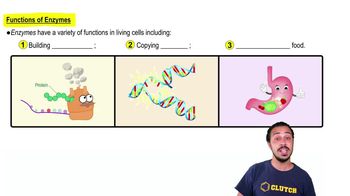
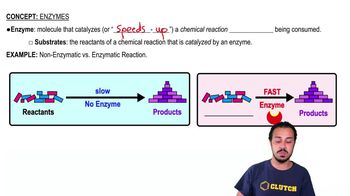
An enzyme is a biological catalyst that lowers activation energy, speeds up reactions, is reusable, and usually a protein.
Enzymes lower the activation energy peak, making reactions faster without changing reactants' or products' energy levels.
Cold temperatures usually slow enzyme activity by reducing molecular movement but do not permanently damage enzymes.
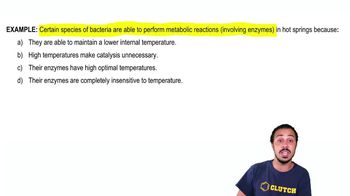
Increasing temperature raises enzyme activity until an optimum; excessive heat denatures enzymes, changing their shape and reducing activity.
Each enzyme has an optimal pH; too acidic or basic conditions can reduce activity or denature the enzyme by altering its shape.
A competitive inhibitor competes with the substrate for the enzyme's active site, blocking substrate binding; effect can be reduced by more substrate.
A noncompetitive inhibitor binds elsewhere on the enzyme, changing its shape and function; adding substrate does not overcome inhibition.
Food processing stages: Ingestion, Digestion, Absorption, and Elimination.
Proteins are digested into amino acids, which are used to build and repair body proteins.
Fats (lipids) are digested into fatty acids and monoglycerides, important for energy storage and cell membranes.
Polysaccharides and disaccharides are broken down into monosaccharides like glucose, which provide energy.
The alimentary canal is the continuous tube food passes through; the digestive system includes this plus accessory organs like liver and pancreas.
Peristalsis is wave-like muscle contractions that push food through the digestive tract, occurring in the esophagus, stomach, and intestines.
The epiglottis is a flap that directs food to the esophagus and prevents it from entering the airway during swallowing.
The stomach stores food, churns it mechanically, and begins chemical digestion of proteins using acid and pepsin.
The small intestine has villi and microvilli to increase surface area for nutrient absorption and contains blood capillaries and lacteals for transport.
Mechanical digestion physically breaks food into smaller pieces; chemical digestion uses enzymes to break molecules into smaller units.
Bile, produced by the liver and stored in the gallbladder, emulsifies fats to increase surface area for lipase but is not an enzyme.
Amylase breaks starch into smaller carbohydrates and simple sugars; produced by salivary glands and pancreas.
Lipase breaks fats into fatty acids and monoglycerides; produced mainly by the pancreas.
Trypsin, produced by the pancreas, breaks proteins into smaller peptides in the small intestine.
Pepsin is produced in the stomach and breaks proteins into smaller peptides; works best in acidic conditions.
Bicarbonate, produced by the pancreas, neutralizes acidic chyme entering the small intestine to protect it and optimize enzyme function.
Sphincters are muscular rings controlling food passage between digestive organs, e.g., pyloric sphincter controls chyme release from stomach to small intestine.