 Indietro
General Biology: Essential Chemistry for Biology
 02:13
02:13
Termini in questo insieme (24)
Matter is anything that occupies space and has mass. It exists in three physical states: solid, liquid, and gas.
An element is a substance that cannot be broken down into other substances by chemical reactions. All matter is composed of chemical elements.
There are 92 naturally occurring elements, including carbon, oxygen, and gold.
Oxygen (O), carbon (C), hydrogen (H), and nitrogen (N) make up about 96% of the human body weight.
Trace elements are required in very small amounts and are essential for life, such as iodine and fluorine.
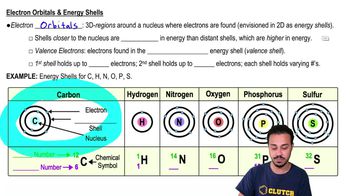
An atom is the smallest unit of matter that retains the properties of an element.
Atoms are composed of protons (positive charge), electrons (negative charge), and neutrons (neutral charge).
The atomic number is the number of protons in an atom's nucleus and uniquely identifies the element.
Isotopes are alternate forms of an element with the same number of protons and electrons but different numbers of neutrons.
A radioactive isotope has a nucleus that decays spontaneously, emitting radiation that can damage cells.
Radioactive isotopes serve as tracers in medical imaging, such as PET scans, to detect diseases like Alzheimer's.
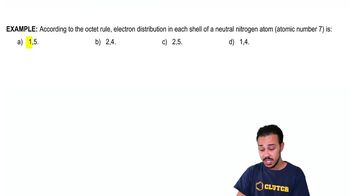
The number and arrangement of electrons determine an atom's chemical properties and reactivity.
An ionic bond forms when atoms transfer electrons, creating oppositely charged ions that attract each other.
A covalent bond forms when two atoms share one or more pairs of electrons, creating a molecule.
Unequal sharing of electrons in covalent bonds between oxygen and hydrogen atoms makes water a polar molecule.
Hydrogen bonds are weak electrical attractions between polar molecules, such as between water molecules.
Cohesion is the tendency of water molecules to stick together due to hydrogen bonding, important for water transport in plants.
Water absorbs or releases heat by breaking or forming hydrogen bonds, which helps stabilize temperatures in organisms and environments.
Ice is less dense than liquid water because stable hydrogen bonds hold molecules apart, allowing ice to float and insulate aquatic life.
A solvent is the dissolving agent, and a solute is the substance dissolved; water is a versatile solvent essential for life.
An acid releases H+ ions in solution, while a base accepts H+ ions, affecting the pH of the solution.
The pH scale measures hydrogen ion concentration, ranging from 0 (acidic) to 14 (basic), with 7 being neutral.
Buffers minimize pH changes by accepting or donating H+ ions, maintaining stable conditions in biological systems.
Radioactive decay allows radiometric dating to estimate fossil ages, helping to build the fossil record and evolutionary timeline.