What is the basic structural and functional unit of living organisms?
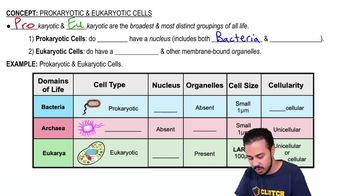
The cell is the basic 'building block' of living organisms.
What are organelles in a eukaryotic cell?
Organelles are membrane-bound bodies with substantial lifetime in the cell, performing specialized functions.
What is the role of the nucleus in a eukaryotic cell?
The nucleus stores DNA and is the site where DNA is transcribed into RNA.
What is the nuclear pore complex (NPC)?
The NPC is composed of ~1,000 proteins, stabilizes an ~800-Å-wide pore, allows passive diffusion of molecules smaller than ~40 kDa, and requires specialized transport for larger macromolecules.
What are the main functions of the endoplasmic reticulum (ER)?
The ER is involved in protein synthesis (secreted and membrane-bound), lipid biosynthesis, and calcium storage.
How does the rough ER differ from the smooth ER?
The rough ER has ribosomes for protein synthesis; the smooth ER is involved in lipid metabolism and lacks ribosomes.
What is the primary function of the Golgi apparatus?
The Golgi apparatus processes and sorts proteins destined for the cell membrane or secretion.
What are the main roles of mitochondria?
Mitochondria generate NADH and ATP and are involved in apoptosis.
What is the cytoskeleton composed of?
The cytoskeleton is composed of microfilaments (actin), intermediate filaments, and microtubules (tubulin).
What is the role of microfilaments in the cytoskeleton?
Microfilaments are composed of actin and provide structural support and enable cell movement.
What are intermediate filaments and their function?
Intermediate filaments provide mechanical strength and help maintain cell shape.
What are microtubules and their function?
Microtubules are dynamic structures made of tubulin that help with intracellular transport and cell division.
What is the extracellular matrix (ECM)?
The ECM is a network of proteins like collagen and fibronectin outside the cell that provides structural support and mediates cell signaling.
What is the plant cell wall primarily composed of?
The plant cell wall is mainly composed of cellulose, providing rigidity and protection.
How is genetic information stored and used in the cell?
DNA in the nucleus stores information; it is transcribed into RNA, which is translated into proteins in the cytosol or on the rough ER.
What is the role of ribosomes in the cell?
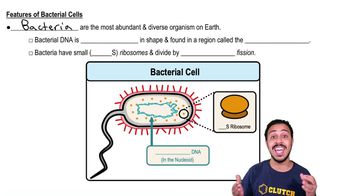
Ribosomes synthesize proteins by translating messenger RNA sequences into amino acid chains.
What is the function of the nuclear envelope?
The nuclear envelope encloses the nucleus and contains nuclear pores for regulated transport of molecules.
What is the difference between the cis and trans faces of the Golgi apparatus?
The cis face receives proteins from the ER; the trans face ships processed proteins to their destinations.
What is the role of T cells in the immune system?
T cells coordinate immune responses and can directly attack virus-infected cells.
What defines a living entity according to the study materials?
A living entity is defined by its cellular basis and dynamic biochemical processes.
 Indietro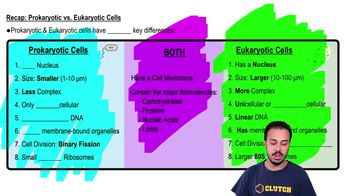
 04:26
04:26