 Indietro
General Biology: Eukaryotic Cell Structure and Function
 04:26
04:26
Termini in questo insieme (20)
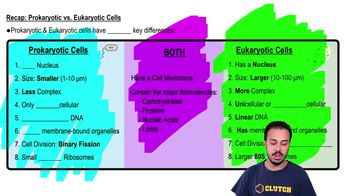
The cell is the basic building block of living organisms.
An organelle is a membrane-bound body with a substantial lifetime in the cell, relatively permanent and specialized for specific functions.
The nucleus stores DNA and is the site where DNA is transcribed into RNA for protein synthesis.
The NPC is composed of ~1,000 protein subunits, stabilizes an ~800-Å-wide nuclear envelope pore, and controls transport of macromolecules in and out of the nucleus.
Macromolecules smaller than ~40 kDa can passively diffuse through the nuclear pore.
The ER is responsible for protein synthesis (secreted and membrane-bound), lipid biosynthesis, and calcium storage.
Rough ER has ribosomes and synthesizes proteins; Smooth ER lacks ribosomes and is involved in lipid metabolism and calcium storage.
The Golgi apparatus processes and sorts proteins destined for the cell membrane or secretion.
Mitochondria generate NADH and ATP and play a role in apoptosis.
Mitochondria are small, dynamic organelles forming a continuous tubular network that varies by cell type and state.
The cytoskeleton is composed of microtubules, intermediate filaments, and microfilaments.
Microfilaments are composed of actin and are involved in cell shape and movement.
Intermediate filaments provide mechanical support and are composed of proteins like keratin.
Microtubules are composed of tubulin and are involved in intracellular transport and cell division.
The ECM is a network of proteins like collagen and fibronectin outside the cell that provides structural support and mediates cell signaling.
The main component of plant cell walls is cellulose.
The plasma membrane connects the cytoskeleton inside the cell to the extracellular matrix outside via integrin proteins.
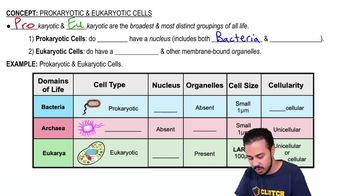
A eukaryotic cell is roughly 10-30 micrometers wide.
A living entity is defined by its ability to grow, reproduce, respond to stimuli, and maintain homeostasis.
False. Mitochondria generate energy; protein synthesis occurs mainly in the ER and ribosomes.