 Indietro
General Biology: Evolution and Development Concepts
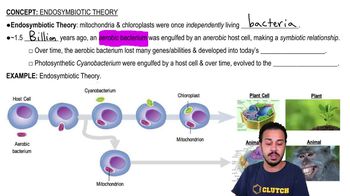
 06:58

Termini in questo insieme (15)
A ribozyme is an RNA molecule capable of catalyzing specific biochemical reactions, similar to protein enzymes.
Radiometric dating is a method used to determine the age of rocks and fossils by measuring the decay of radioactive isotopes.
Half life is the time required for half of the radioactive atoms in a sample to decay.
Stromatolites are layered sedimentary formations created by the growth of cyanobacteria, some of the oldest evidence of life on Earth.
Endosymbiosis is the theory that certain organelles, like mitochondria and chloroplasts, originated as free-living bacteria engulfed by ancestral eukaryotic cells.
A mass extinction is a widespread and rapid decrease in the biodiversity on Earth, eliminating many species in a relatively short time.
Adaptive radiations are rapid evolutionary diversifications of a single lineage into many species adapted to different environments.
Heterochrony refers to evolutionary changes in the timing or rate of developmental events, affecting organism shape and size.
Paedomorphosis is a form of heterochrony where adults retain traits previously seen only in juveniles.
Microevolution involves small genetic changes within a population, while macroevolution refers to large-scale evolutionary changes that can result in new species.
The Paleozoic Era (about 541-252 million years ago) is known for the emergence of diverse marine life and the first land plants and animals.
The Mesozoic Era (about 252-66 million years ago) is the age of reptiles, including dinosaurs, and the first birds and mammals.
The Cenozoic Era (about 66 million years ago to present) is the age of mammals and flowering plants, with significant diversification of life.
Homeotic genes control the development of anatomical structures in various organisms by regulating the identity of body parts.
Hox genes are a subset of homeotic genes that determine the head-to-tail body axis and segment identity in animals.