Indietro

General Biology Exam 1

I pulsanti di controllo sono stati cambiati in modalità "navigazione".
1/65
  • What is a hypothesis?

    A testable explanation for an observation.

  • What is an independent variable?

    The variable changed on purpose in an experiment.

  • What is a dependent variable?

    The variable measured in an experiment.

  • What are controlled variables?

    Factors that are kept constant during an experiment.

  • What is a control group?

    The group that does not receive the experimental treatment.

  • What makes a hypothesis scientific?

    It must be testable and falsifiable.

  • When do you reject a hypothesis?

    When the data does not support it.

  • What is the purpose of a controlled experiment?

    To isolate the effect of one variable.

  • What are the characteristics of life?

    Organization, metabolism, homeostasis, growth, reproduction, response, evolution.

  • List the taxonomic levels in order.

    Domain → Kingdom → Phylum → Class → Order → Family → Genus → Species.

  • How are subatomic particles arranged in an atom?

    Protons and neutrons in the nucleus; electrons in shells; valence electrons in outer shell.

  • What are valence electrons?

    Electrons in the outermost shell that determine bonding.

  • What is a covalent bond?

    Sharing electrons between atoms.

  • What is an ionic bond?

    Transfer of electrons between atoms.

  • What is a hydrogen bond?

    A weak attraction between polar molecules.

  • What is an isotope?

    Same element with a different number of neutrons.

  • What is a polar molecule?

    Unequal sharing of electrons; has partial charges.

  • What is a nonpolar molecule?

    Equal sharing of electrons; no charge difference.

  • What does hydrophobic mean?

    Water-fearing; nonpolar molecules.

  • What does hydrophilic mean?

    Water-loving; polar molecules.

  • What are the monomers of carbohydrates?

    Monosaccharides.

  • What are the monomers of proteins?

    Amino acids.

  • What are the monomers of nucleic acids?

    Nucleotides.

  • What are the monomers of lipids?

    Fatty acids and glycerol.

  • What is the primary structure of a protein?

    The linear sequence of amino acids.

  • What is the secondary structure of a protein?

    Coils and folds like α-helix and β-sheet.

  • What is the tertiary structure of a protein?

    The 3-D shape of a single polypeptide chain.

  • What is the quaternary structure of a protein?

    Multiple polypeptide chains working together.

  • What is dehydration synthesis?

    Builds polymers by removing water.

  • What is hydrolysis?

    Breaks polymers by adding water.

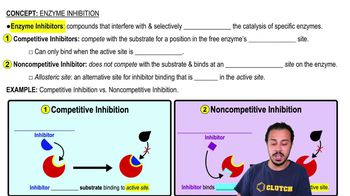
  • What is an enzyme?

    A protein that speeds up chemical reactions.

  • What affects enzyme activity?

    Temperature, pH, and substrate concentration.

  • What is the main difference between DNA and RNA?

    DNA is double-stranded; RNA is single-stranded.

  • What is ATP?

    The cell’s energy molecule.

  • What is the key difference between prokaryotes and eukaryotes?

    Prokaryotes lack a nucleus; eukaryotes have a nucleus.

  • What is the function of the nucleus?

    Stores DNA and makes ribosomes.

  • What is the function of mitochondria?

    Produces ATP, the cell’s energy.

  • What is the function of ribosomes?

    Protein synthesis.

  • What is the function of the rough ER?

    Protein folding and processing.

  • What is the function of the smooth ER?

    Lipid synthesis and detoxification.

  • What is the function of the Golgi apparatus?

    Modifies, sorts, and ships proteins.

  • What is the function of lysosomes?

    Digestion and waste removal.

  • What is the cytoskeleton?

    Structural support and movement within the cell.

  • Why must cells stay small?

    To maintain a high surface-area-to-volume ratio for efficient exchange.

  • What is the protein pathway?

    Ribosome → ER → Golgi → destination.

  • What is the phospholipid bilayer?

    Hydrophilic heads and hydrophobic tails forming the cell membrane.

  • What is the fluid mosaic model?

    Membrane with moving lipids and floating proteins.

  • What is simple diffusion?

    Movement of molecules from high to low concentration without energy.

  • What is facilitated diffusion?

    Diffusion through a protein channel without energy.

  • What is active transport?

    Movement of molecules using ATP energy.

  • What is osmosis?

    Diffusion of water toward solutes.

  • What happens in a hypertonic solution?

    The cell shrinks due to water loss.

  • What happens in a hypotonic solution?

    The cell swells due to water gain.

  • What happens in an isotonic solution?

    No net change in cell volume.

  • What does the Na/K pump do?

    Pumps 3 Na+ out and 2 K+ in using ATP.

  • What is endocytosis?

    Bringing materials into the cell.

  • What is exocytosis?

    Releasing materials out of the cell.

  • What molecules cross the membrane easily?

    Small, nonpolar molecules.

  • What molecules need protein channels?

    Large or charged molecules.

  • What is a concentration gradient?

    Difference in concentration across space.

  • What is a tight junction?

    Creates a seal between cells.

  • What is a desmosome?

    Anchors cells together.

  • What is a gap junction?

    Allows communication between cells.

  • Where are tight junctions commonly found?

    In the intestinal lining.

  • What is the purpose of cell junctions?

    To connect and communicate between cells.