 Indietro
General Biology Exam 1 Key Concepts
 09:50
09:50
Termini in questo insieme (28)
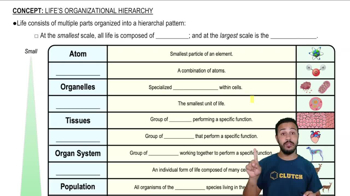
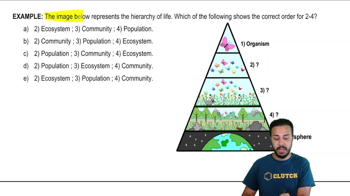
From smallest to largest: Atom, Molecule, Organelle, Cell, Tissue, Organ, Organ system, Organism, Population, Community, Ecosystem, Biosphere.
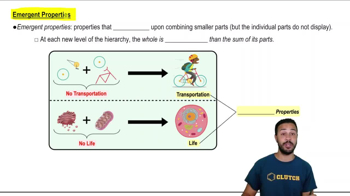
A new property that arises at a higher level of organization due to interactions among parts, e.g., flight emerges at the organism level.
Organization, energy processing, reproduction, growth and development, response to stimuli, regulation, evolutionary adaptation.
Make observations, ask a question, form a hypothesis, design controlled experiment, collect data, analyze data and test null hypothesis.
Specific, testable, falsifiable. Null hypothesis states no effect; alternative states an effect exists.
Electron transfer creates cation (+) and anion (-) that attract each other; often between atoms with very different electronegativities.
Electrons shared unequally, creating partial charges (δ+ and δ-); common in O-H and N-H bonds.
Electrons shared equally or nearly equally; common in C-C and C-H bonds.
Weak attraction between partial positive H and electronegative atoms (F, O, N); important in water and DNA base pairing.
Cohesion/adhesion, temperature moderation, expansion on freezing, versatile solvent.
Measures H+ concentration; 1 unit change = 10x change in H+. Acid increases H+, lowers pH; base decreases H+, raises pH.
Hydroxyl (-OH), Carbonyl (C=O), Carboxyl (-COOH), Amino (-NH2), Sulfhydryl (-SH), Phosphate (-OPO3^2-), Methyl (-CH3).
Condensation (dehydration) joins monomers by removing water; hydrolysis breaks bonds by adding water.
Monosaccharides linked by glycosidic bonds form polysaccharides.
Starch: plant energy storage, alpha glucose; Glycogen: animal energy storage, highly branched alpha glucose; Cellulose: plant structural support, beta glucose.
Saturated: no C=C double bonds, straight tails, tightly packed; Unsaturated: ≥1 C=C double bonds, kinks, less packing, more fluid.
Amphipathic: hydrophilic phosphate head and hydrophobic fatty acid tails; self-assemble into bilayers in water.
Amino acids linked by peptide bonds form polypeptides.
Primary: amino acid sequence; Secondary: local folding (alpha helices, beta sheets); Tertiary: 3D shape from R-group interactions; Quaternary: multiple polypeptide subunits.
Disrupts secondary, tertiary, or quaternary structure by changes in temperature, pH, or polarity; primary sequence usually remains intact.
5-carbon sugar + phosphate group + nitrogenous base.
DNA: deoxyribose sugar, double-stranded, bases A,T,G,C; RNA: ribose sugar, single-stranded, bases A,U,G,C.
Purines: adenine (A), guanine (G) with two rings; Pyrimidines: cytosine (C), thymine (T), uracil (U) with one ring.
DNA is transcribed to RNA, which is translated into protein.
Mitochondria and chloroplasts originated from engulfed free-living prokaryotes, supported by their own DNA and ribosomes.
Prokaryotes lack membrane-bound nucleus and organelles; eukaryotes have both and are generally larger and compartmentalized.
Polypeptide synthesized on bound ribosome → rough ER → transport vesicle → Golgi apparatus → vesicle → plasma membrane or secretion.
Cell wall, chloroplasts, large central vacuole, plasmodesmata.