 Indietro
General Biology Exam 1 Review: Chapters 1-4
 09:50

Termini in questo insieme (32)
The three domains are Bacteria, Archaea, and Eukarya, which classify all living organisms based on cellular and genetic differences.
The nucleus stores DNA and controls cell activities by regulating gene expression.
Mitochondria produce most of the cell's ATP through cellular respiration.
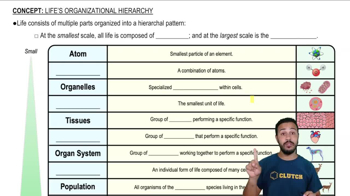
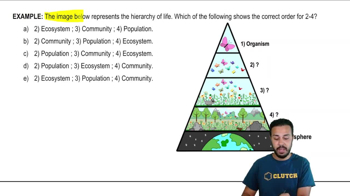
Levels include molecule, cell, tissue, organ, organ system, organism, population, community, ecosystem, and biosphere.
Smaller cells have a higher surface area to volume ratio, which improves nutrient and waste exchange efficiency.
Light microscopy for live cells, electron microscopy for detailed ultrastructure.
Oxygen, carbon, hydrogen, and nitrogen are the most abundant elements in the human body.
Reductionism breaks complex biological systems into simpler parts to understand their function.
DNA stores genetic information essential for inheritance and protein synthesis.
Bond formed by the transfer of electrons between atoms, creating oppositely charged ions.
Bond formed by the sharing of electron pairs between atoms.
Weak attraction between a hydrogen atom covalently bonded to one electronegative atom and another electronegative atom.
A molecule is polar if it has unequal sharing of electrons and an asymmetric shape causing partial charges.
Negatively charged elements attract positively charged elements due to electrostatic forces.
pH < 7 is acidic; pH > 7 is basic (alkaline); pH = 7 is neutral.
Observation, question, hypothesis, experiment, analysis, conclusion.
Homeostasis is the maintenance of a stable internal environment despite external changes.
An element is a pure substance of one type of atom; a molecule is two or more atoms bonded together.
Both have atoms and molecules, but only living things show metabolism, growth, reproduction, and response to stimuli.
Used for tracing molecules in biological systems and medical imaging.
Atoms gain or lose electrons to become ions, changing their charge.
Movement of molecules from an area of higher concentration to lower concentration until equilibrium.
ATP synthase produces most ATP by using the proton gradient.
Small nonpolar molecules and some small polar molecules can pass; large or charged molecules cannot pass freely.
Movement of molecules against their concentration gradient using energy (ATP).
Isotonic solutions have equal solute concentration inside and outside the cell, causing no net water movement.
Glycolysis breaks down glucose into pyruvate, producing ATP and NADH.
NAD+ and FAD accept electrons to become NADH and FADH2, carrying electrons to the electron transport chain.
The plasma membrane consists mainly of a phospholipid bilayer with embedded proteins, cholesterol, and carbohydrates.
Includes loose connective, dense connective, cartilage, bone, and blood.
The stomach contains smooth muscle tissue for involuntary contractions.
Includes tight junctions, desmosomes, and gap junctions, which connect and communicate between cells.