 Indietro
General Biology Exam 1 Review: Chapters 1-4
 09:50

Termini in questo insieme (31)
The three domains are Bacteria, Archaea, and Eukarya.
Nucleus: stores DNA
Mitochondria: produces ATP
Ribosomes: synthesize proteins
Endoplasmic Reticulum: synthesizes lipids and proteins
Golgi Apparatus: modifies and packages proteins
Lysosomes: digest waste
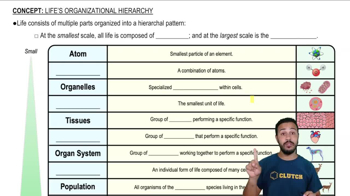
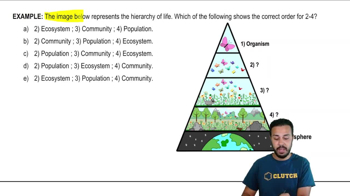
Atoms < Molecules < Organelles < Cells < Tissues < Organs < Organ Systems < Organisms
As cell size increases, surface area to volume ratio decreases, limiting efficient exchange of materials.
Light microscopy: views living cells
Electron microscopy: views detailed cell structures
Fluorescence microscopy: labels specific molecules
Oxygen, Carbon, Hydrogen, and Nitrogen are the most abundant elements.
Reductionism is studying complex systems by breaking them down into simpler parts.
DNA stores genetic information and directs protein synthesis.
Ionic bonds: transfer of electrons
Covalent bonds: sharing of electrons
Hydrogen bonds: weak attraction between polar molecules
Polarity depends on the difference in electronegativity and molecular shape; polar molecules have uneven charge distribution.
They attract each other due to opposite charges, forming ionic bonds.
Acidic substances have pH < 7; basic (alkaline) substances have pH > 7.
Observation, Question, Hypothesis, Experiment, Data Analysis, Conclusion.
Homeostasis is the maintenance of a stable internal environment despite external changes.
An element is a pure substance of one type of atom; a molecule is two or more atoms chemically bonded.
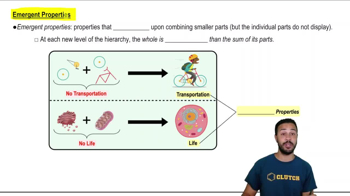
Both have atoms and molecules, but only living things show metabolism, growth, reproduction, and response to stimuli.
It helps trace biochemical pathways and date fossils by detecting radioactive decay.
Atoms gain or lose electrons to become ions with positive or negative charges.
Diffusion is the passive movement of molecules from high to low concentration.
Most ATP is produced in the mitochondrial inner membrane by ATP synthase.
Small nonpolar molecules pass freely; large or charged molecules require transport proteins.
Active transport moves molecules against their concentration gradient using energy (ATP).
An isotonic solution has equal solute concentration; cells maintain their normal shape.
Glycolysis breaks down glucose into pyruvate, producing ATP and NADH.
NAD+ and FAD are electron carriers; they get electrons from oxidized metabolic intermediates.
The plasma membrane is mainly a phospholipid bilayer with embedded proteins and cholesterol.
Connective tissues include loose, dense, cartilage, bone, and blood.
Loose: under skin; Dense: tendons; Cartilage: joints; Bone: skeleton; Blood: circulatory system.
The stomach contains smooth muscle, which is involuntary and non-striated.
Epithelial: covers surfaces
Connective: supports and binds
Muscle: movement
Nervous: transmits signals
Tight junctions: seal cells
Desmosomes: anchor cells
Gap junctions: allow communication