Skip to main content
General Biology
Il mio corso
Impara
Preparazione agli esami
AI Tutor
Guide di studio
Soluzioni per libri di testo
Flashcard
Esplora
Prova l'app
Il mio corso
Impara
Preparazione agli esami
AI Tutor
Guide di studio
Soluzioni per libri di testo
Flashcard
Esplora
Prova l'app
Indietro
General Biology Exam 1 Study Guide
Puoi toccare per girare la carta.
Emergent property
Puoi toccare per girare la carta.
👆
Emergent property
A characteristic that arises from the interaction of simpler elements at a higher level of biological organization.
Avanzamenti del tracciato
I pulsanti di controllo sono stati cambiati in modalità "navigazione".
1/31
Video consigliati
09:26
Characteristics of Life
44709
views
1283
rank
9
comments
02:59
Characteristics of Life Example 1
25611
views
789
rank
4
comments
Termini in questo insieme (31)
Nascondere definizioni
Emergent property
A characteristic that arises from the interaction of simpler elements at a higher level of biological organization.
Levels of biological organization from molecule to ecosystem
Molecule, organelle, cell, tissue, organ, organ system, organism, population, community, ecosystem.
Four elements making up >95% of human body mass
Oxygen, carbon, hydrogen, and nitrogen.
Polar covalent bond
A bond where electrons are shared unequally between atoms with different electronegativities, creating partial charges.
Hydrogen bond
A weak bond between a hydrogen atom in a polar molecule and an electronegative atom in another polar molecule.
Why water molecules have polar covalent bonds
Because oxygen is more electronegative than hydrogen, electrons are shared unequally, creating partial charges.
Four emergent properties of water essential for life
Cohesion, moderation of temperature, expansion upon freezing, and solvent abilities.
Hydrocarbon
A molecule consisting only of carbon and hydrogen atoms.
ATP and its importance
A molecule that stores and transfers energy in cells, essential for cellular processes.
Dehydration synthesis
A chemical reaction where water is removed to form a bond between monomers, creating polymers.
Hydrolysis reaction
A chemical reaction where water is added to break bonds in polymers into monomers.
Monomers and polymers in biological macromolecules
Monomers are single units; polymers are chains of monomers linked by covalent bonds.
Three types of lipids and their roles
Triglycerides (energy storage), phospholipids (membrane formation), steroids (signaling molecules).
Difference between saturated and unsaturated fats
Saturated fats have no double bonds and are solid at room temperature; unsaturated fats have one or more double bonds and are liquid.
Phospholipid structure and membrane formation
Phospholipids have hydrophilic heads and hydrophobic tails, forming bilayers that make up cell membranes.
Basic structure of a steroid
Four fused carbon rings; structure allows steroids to act as signaling molecules.
Monosaccharides vs. polysaccharides
Monosaccharides are single sugar units (monomers); polysaccharides are long chains of sugars (polymers).
Nucleotide structure and nucleic acid backbone
Nucleotides consist of a sugar, phosphate group, and nitrogenous base; sugar-phosphate forms the backbone linked by phosphodiester bonds.
Amino acid structure
Consists of an amino group, carboxyl group, and variable R group; peptide bonds form between amino and carboxyl groups.
Levels of protein structure
Primary (sequence), secondary (alpha-helices and beta-sheets), tertiary (3D folding), quaternary (multiple polypeptides).
Prokaryotic vs. eukaryotic cells
Prokaryotes lack a nucleus and membrane-bound organelles; eukaryotes have both.
Common cell components in all cells
Plasma membrane, cytosol, chromosomes, and ribosomes.
Endomembrane system components
Rough ER, smooth ER, Golgi apparatus, lysosomes, and vesicles.
Nucleus structure and function
Contains DNA, surrounded by nuclear envelope with pores for molecule transport.
Protein synthesis locations and fates
Occurs on free and bound ribosomes; proteins may be used inside the cell, secreted, or embedded in membranes.
Differences between rough and smooth ER
Rough ER has ribosomes and synthesizes proteins; smooth ER synthesizes lipids and detoxifies.
Golgi apparatus function and polarity
Modifies, sorts, and ships proteins; cis side receives vesicles, trans side ships them out.
Mitochondria and chloroplast functions
Mitochondria produce ATP via cellular respiration; chloroplasts conduct photosynthesis.
Endosymbiont theory
Mitochondria and chloroplasts originated from free-living prokaryotes engulfed by ancestral eukaryotic cells.
Functions of the cytoskeleton
Maintains cell shape, enables movement, and organizes cell components; centrioles assist in cell division.
Types of cell junctions in plants and animals
Tight junctions, desmosomes, gap junctions in animals; plasmodesmata in plants.
 IndietroIndietro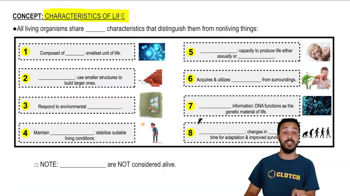
 09:26
09:26