 Indietro
General Biology Exam 1 Study Guide
 01:35

Termini in questo insieme (31)
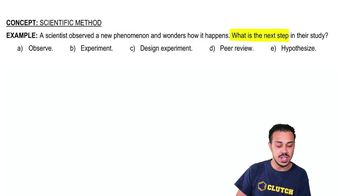
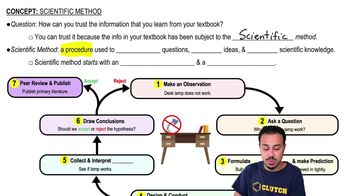
Observation → Question → Hypothesis → Prediction → Experiment → Data → Conclusion.
A testable, falsifiable explanation for an observation.
Independent variable: what you change. Dependent variable: what you measure.
One experiment can support or fail to support a hypothesis but cannot establish universal truth.
A result unlikely due to random chance alone; does not always mean biological importance.
Correlation is association; it does not prove one variable causes another.
Atom: individual element unit. Molecule: two or more atoms chemically connected.
Covalent: atoms share electrons. Noncovalent: weaker interactions like ionic, hydrogen bonds, van der Waals.
Polar covalent: electrons shared unequally, creating partial charges. Nonpolar covalent: electrons shared equally.
Water is polar with partial negative oxygen and partial positive hydrogens; hydrogen bonds give water unique properties.
Hydrophilic: interacts with water (polar/charged). Hydrophobic: repels water (nonpolar).
Carbohydrates: monosaccharides; Lipids: fatty acids + glycerol; Proteins: amino acids; Nucleic acids: nucleotides.
Carbs: energy/structure; Lipids: energy storage/membranes; Proteins: enzymes/structure/signaling; Nucleic acids: genetic info.
Saturated: no C=C bonds, straight, pack tightly. Unsaturated: one or more C=C bonds, bent, pack loosely.
Phospholipids are amphipathic with hydrophilic heads and hydrophobic tails, forming bilayers in water.
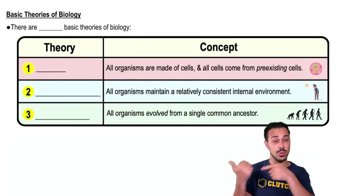
Prokaryotic: no nucleus or membrane-bound organelles. Eukaryotic: nucleus and membrane-bound organelles.
Nucleus stores DNA; ribosomes synthesize proteins.
Mitochondria: cellular respiration. Chloroplasts: photosynthesis.
Entropy is disorder/randomness; high entropy means more spread out, low entropy means more organized.
Energy-releasing: \(\Delta G < 0\). Energy-requiring: \(\Delta G > 0\).
Activation energy is energy to start a reaction; ΔG is overall energy difference between reactants and products.
Enzymes lower activation energy and speed reactions but do not change ΔG or energy released/required.
Competitive: competes for active site; Noncompetitive: binds elsewhere; Irreversible: permanently disables enzyme.
ATP → ADP + Pi releases usable free energy for cellular work.
Oxidation Is Loss of electrons; Reduction Is Gain of electrons.
Occurs in cytosol; converts 1 glucose → 2 pyruvate + 2 ATP (net) + 2 NADH; does not require oxygen directly.
Transfers electrons to pump protons, creating a gradient that drives ATP synthase to make ATP.
Regenerates oxidized electron carriers so glycolysis can continue without oxygen; produces less ATP than aerobic respiration.
Light reactions (thylakoid membrane) produce ATP, NADPH, O2; Calvin cycle (stroma) uses CO2, ATP, NADPH to make carbohydrates.
Leaves reflect certain wavelengths; the reflected wavelengths determine the leaf color seen.
Photosynthesis stores energy, uses CO2, produces O2, occurs in chloroplasts. Respiration releases energy, uses O2, produces CO2, occurs in mitochondria.