 Indietro
General Biology Exam 2 Key Concepts
 04:26
04:26
Termini in questo insieme (21)
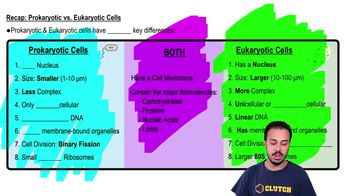
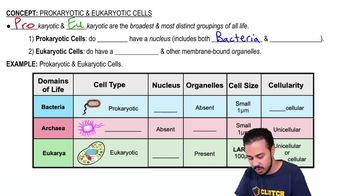
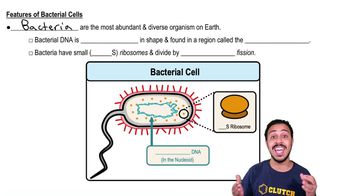
Prokaryotic cells lack a nucleus and membrane-bound organelles; eukaryotic cells have a nucleus and organelles. Both have plasma membranes and ribosomes.
Light microscope for living cells; scanning electron microscope (SEM) for 3D surface images; transmission electron microscope (TEM) for detailed internal structures.
Mitochondria produce ATP via cellular respiration; chloroplasts conduct photosynthesis. Both have double membranes and their own DNA, supporting endosymbiotic origin.
Includes nuclear envelope, endoplasmic reticulum, Golgi apparatus, lysosomes, vesicles, and plasma membrane; involved in protein and lipid synthesis and transport.
First law: energy cannot be created or destroyed; second law: entropy increases in a system. Metabolism transforms energy with some loss as heat.
Chemical energy stored in bonds, potential energy as stored energy, kinetic energy as energy of motion.
ATP has adenine, ribose, and three phosphate groups; it stores and transfers energy by releasing phosphate groups.
Membrane is a fluid bilayer of phospholipids with embedded proteins that move laterally, allowing selective permeability and communication.
Provides structural support, mediates cell communication, and influences cell behavior outside the plasma membrane.
Diffusion: movement down concentration gradient; osmosis: water diffusion; facilitated diffusion: uses transport proteins, no energy required.
Hypertonic: cell loses water; hypotonic: cell gains water; isotonic: no net water movement.
Requires energy (ATP), uses transport proteins, moves substances against concentration gradient (low to high).
Endocytosis: cell engulfs materials via vesicles; exocytosis: vesicles fuse with membrane to release contents outside the cell.
DNA is wrapped around histones forming chromatin, located mainly in the nucleus of eukaryotic cells.
Enzymes lower activation energy to speed reactions; substrate binds active site; inhibitors reduce activity.
Inputs: glucose and oxygen; outputs: carbon dioxide, water, and ATP.
Glycolysis (cytoplasm), Krebs cycle (mitochondrial matrix), electron transport chain (inner mitochondrial membrane); oxygen required for ETC.
True. Fats and proteins can be broken down and enter cellular respiration pathways for energy.
Alcoholic fermentation produces ethanol and CO2; lactic acid fermentation produces lactate; both occur without oxygen.
Heterotrophs consume organic molecules; autotrophs produce their own food via photosynthesis or chemosynthesis.
Producers make organic compounds from inorganic sources; consumers eat other organisms for energy.