 Indietro
General Biology Exam 2 Study Guide: Biodiversity and Evolution
 04:39

Termini in questo insieme (29)
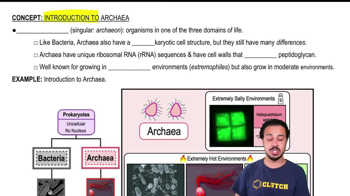
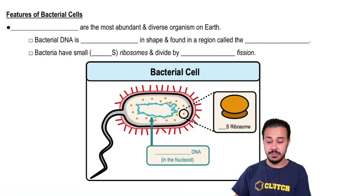
Bacteria have peptidoglycan cell walls and ester-linked membrane lipids; Archaea have unique ether-linked lipids and lack peptidoglycan.
Gram-positive bacteria have thick peptidoglycan walls retaining crystal violet stain; Gram-negative have thin walls and an outer membrane, not retaining the stain.
Enrichment cultures grow specific microbes under lab conditions; metagenomics sequences DNA directly from environmental samples without culturing.
Four criteria to prove a microbe causes a disease: association, isolation, reproduction of disease, and re-isolation.
Includes transformation, transduction, and conjugation enabling genetic recombination.
Combinations of energy sources (light or chemical) and carbon sources (organic or inorganic), including photoautotrophy, chemoheterotrophy, etc.
Oxygenic produces oxygen using water as electron donor (e.g., cyanobacteria); anoxygenic does not produce oxygen, uses other electron donors.
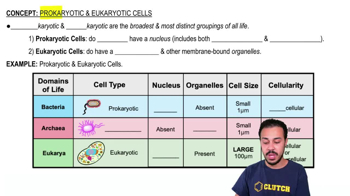
Features include nuclear envelope, membrane-bound organelles, linear chromosomes, and cytoskeleton.
Primary engulfment of a prokaryote by a eukaryote; secondary engulfment of a eukaryote by another eukaryote.
Infoldings of the plasma membrane separated transcription from translation, enabling alternative splicing.
Amoebozoa, Opisthokonta, Excavata, Plantae, Rhizaria, Alveolata, and Stramenopiles.
Chlorophyll a and b, cellulose cell walls, and starch storage.
Cuticle prevents water loss; stomata regulate gas exchange via guard cells.
Flavonoid pigments act as internal sunscreens protecting against UV damage.
From simple conducting cells to lignified tracheids and vessel elements for structural support and transport.
From gametophyte-dominated to sporophyte-dominated life cycles.
Heterospory produces microspores (male) and megaspores (female); homospory produces one spore type.
Sporopollenin-coated male gametophytes enabling fertilization without water.
Single-celled yeasts and multicellular mycelia composed of hyphae.
Lignin peroxidase breaks down lignin; cellulases hydrolyze cellulose into glucose.
Ectomycorrhizal fungi form hyphal sheaths around roots; arbuscular mycorrhizal fungi penetrate root cells forming arbuscules.
Plasmogamy is cytoplasmic fusion; karyogamy is nuclear fusion, producing heterokaryotic or dikaryotic states.
Multicellularity, lack of cell walls, collagen-rich extracellular matrix, motility, ingestion, and nerve/muscle cells.
Diploblasts have ectoderm and endoderm with radial symmetry; triploblasts add mesoderm with bilateral symmetry and CNS.
Protostomes: spiral cleavage, blastopore becomes mouth; deuterostomes: radial cleavage, blastopore becomes anus.
Defined by lophophore feeding structure, trochophore larva, and spiral cleavage.
Growth by molting (ecdysis) of an outer cuticle or exoskeleton.
Notochord, dorsal hollow nerve cord, pharyngeal gill slits, and muscular post-anal tail.
Four extraembryonic membranes (amnion, yolk sac, allantois, chorion) enabling water independence.