 Indietro
General Biology Exam I Study Flashcards
 02:09


Termini in questo insieme (31)
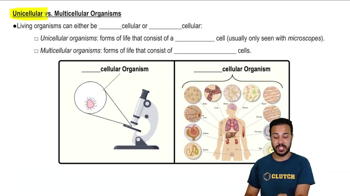
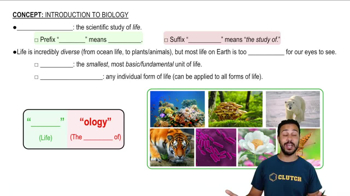
Biology is the scientific study of life, exploring living organisms and life processes.
The three domains are Bacteria, Archaea, and Eukarya, which classify all living organisms.
Matter is anything that takes up space and has mass. An element is a substance that cannot be broken down. A compound is made of two or more elements chemically combined. Trace elements are required in minute amounts for life.
They are added to prevent deficiencies: iodine for thyroid function, fluoride for dental health, and iron for oxygen transport in blood.
Protons are positively charged particles in the nucleus, neutrons have no charge and are also in the nucleus, and electrons are negatively charged particles orbiting the nucleus.
Atomic number is the number of protons in an atom. Mass number is the sum of protons and neutrons in the nucleus.
An isotope is an atom with the same number of protons but different neutrons. Radioactive isotopes have unstable nuclei that decay over time.
Electron configuration determines an atom's ability to form bonds by filling or emptying its outer electron shells.
Covalent bonds share electrons equally; polar covalent bonds share electrons unequally; ionic bonds transfer electrons; hydrogen bonds are weak attractions between polar molecules.
Chemical reactions transform reactants into products, enabling life processes like photosynthesis and metabolism.
Cohesion is water molecules sticking to each other, adhesion is water sticking to other surfaces, and surface tension is the resistance of water's surface to external force.
Heat is total thermal energy; temperature measures intensity of heat. Sweating cools by evaporative cooling, removing heat as water evaporates.
Ice is less dense than liquid water because hydrogen bonds form a crystalline structure that spaces molecules apart.
A solute is a substance dissolved, a solvent dissolves the solute, and a solution is the homogeneous mixture of both.
The pH scale measures hydrogen ion concentration; acids increase H+ concentration, bases decrease it.
Buffers stabilize pH by accepting or donating hydrogen ions to resist changes in acidity or alkalinity.
Carbon has four valence electrons allowing it to form four covalent bonds, creating complex and diverse organic molecules.
Monomers are small building blocks; polymers are large molecules made of monomers linked by dehydration synthesis.
Dehydration synthesis joins monomers by removing water; hydrolysis breaks polymers by adding water.
The four classes are carbohydrates, lipids, proteins, and nucleic acids.
Phospholipids have hydrophilic heads and hydrophobic tails, forming bilayers essential for cell membranes.
A protein's shape, determined by its amino acid sequence and folding, dictates its function.
The levels are primary (amino acid sequence), secondary (alpha helices and beta sheets), tertiary (3D folding), and quaternary (multiple polypeptides).
DNA is double-stranded storing genetic info; RNA is single-stranded and involved in protein synthesis.
Cell theory states all living things are made of cells and all cells come from preexisting cells.
Limits exist due to surface area-to-volume ratio affecting nutrient uptake and waste removal efficiency.
The plasma membrane is a phospholipid bilayer with proteins that controls substance entry and exit.
Prokaryotic cells lack a nucleus and membrane-bound organelles; eukaryotic cells have both.
A network including the ER, Golgi apparatus, lysosomes, and vesicles that modifies, packages, and transports proteins and lipids.
Mitochondria generate ATP via cellular respiration; chloroplasts conduct photosynthesis in plant cells.
The cytoskeleton provides cell shape and movement; it includes microfilaments, intermediate filaments, and microtubules.