 Indietro
General Biology: Fundamental Concepts and Cell Biology
 02:09
02:09

Termini in questo insieme (27)
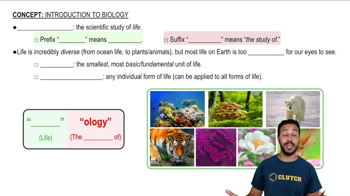
Biology is the scientific study of life, encompassing the study of living organisms and their vital processes.
The cell is the smallest, most basic and fundamental unit of life.
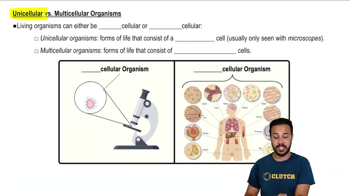
Unicellular organisms consist of a single cell (e.g., bacteria), while multicellular organisms consist of multiple cells (e.g., humans).
Composed of cells, organized structure, respond to stimuli, maintain homeostasis, reproduce, acquire and use energy, contain genetic information (DNA), and evolve.
Homeostasis is the maintenance of stable internal conditions despite external changes, such as sweating to regulate body temperature.
Viruses cannot reproduce independently and must hijack other cells to replicate, so they are not considered living organisms.
Atom → Molecule → Organelle → Cell → Tissue → Organ → Organ System → Organism → Population → Community → Ecosystem → Biosphere.
Properties that arise when smaller parts combine to form a whole, where the whole has characteristics greater than the sum of its parts.
Natural selection is the process where the environment selects for organisms with traits that increase fitness, leading to adaptation.
Genetic diversity in a population and selective pressure for heritable traits affecting fitness.
Evolution is the change in DNA of a population over multiple generations, often driven by natural selection.
Taxonomy is the science of classifying, identifying, and naming organisms using hierarchical categories.
Domain, Kingdom, Phylum, Class, Order, Family, Genus, Species.
Bacteria, Archaea (both prokaryotes), and Eukarya (eukaryotes).
Prokaryotes lack a nucleus and membrane-bound organelles; eukaryotes have a nucleus and organelles.
Kingdom Animalia, Plantae, Fungi, and Protista.
Organisms are categorized as producers (autotrophs), consumers (heterotrophs), or decomposers based on energy acquisition.
A procedure to answer questions and test ideas, starting with observation, hypothesis, prediction, experimentation, and conclusion.
Independent variable is controlled or changed by the researcher; dependent variable is measured as the outcome.
Negative controls expect no response to prevent false positives; positive controls expect a response to prevent false negatives.
Inductive reasoning builds general principles from specific observations; deductive reasoning predicts specific outcomes from general principles.
Lipids, carbohydrates, nucleic acids, and proteins support life’s functions such as energy storage, information transmission, and membrane formation.
Lipids form membranes that provide compartmentation and selective permeability, and can also store energy and provide insulation.
Nucleic acids store and transmit genetic information and are essential for self-replication.
Proteins control cellular functions and enable responses to the environment.
ATP is a nucleic acid molecule that stores and provides energy for cellular work.
A cell is the smallest unit that exhibits all properties of life, including metabolism, reproduction, and response to stimuli.