 Indietro
General Biology: Homeostasis and Control Systems
 07:47
07:47
Termini in questo insieme (12)
Homeostasis is the maintenance of a stable internal environment despite external changes.
The endocrine system regulates homeostasis by releasing hormones that control body functions.
The nervous system detects changes and sends rapid signals to maintain homeostasis.
A receptor nerve detects stimuli or changes in the environment and sends signals to the control center.
The control center processes information from receptors and sends commands to effectors to restore balance.
An effector is an organ or cell that acts to correct deviations from the set point.
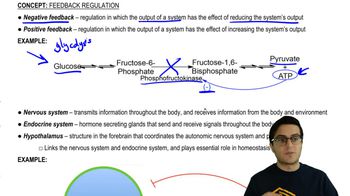
A negative feedback loop reverses a change to return the system to its set point, maintaining stability.
A positive feedback loop amplifies a change, moving the system further from its set point temporarily.
Homeostatic imbalance occurs when the body cannot maintain stable internal conditions, leading to disease.
Insulin is a hormone that lowers blood glucose by promoting its uptake and storage, regulating metabolism.
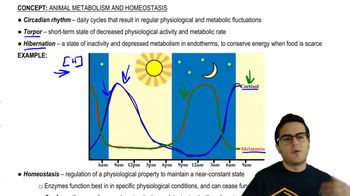
Metabolism is the sum of all chemical reactions in the body that maintain life.
Metabolic rate is the speed at which the body uses energy to carry out metabolic processes.