 Indietro
General Biology: Introduction to the Science of Life
 02:09
02:09

Termini in questo insieme (24)
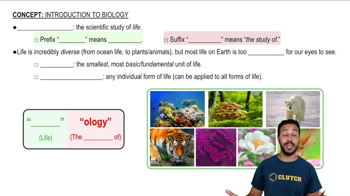
Biology is the scientific study of life.
The prefix "bio" means life, and the suffix "-ology" means the study of.
The cell is the smallest, most fundamental unit of life.
An organism is any individual form of life, applicable to all life forms.
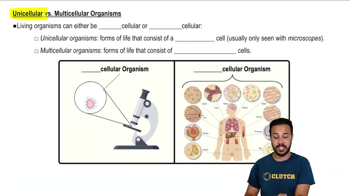
Unicellular organisms consist of a single cell; multicellular organisms consist of many cells.
All living organisms share key characteristics such as organization, homeostasis, energy use, reproduction, and evolution.
Viruses are NOT considered alive because they lack key characteristics of life.
Life is organized from atoms to molecules, organelles, cells, tissues, organs, organ systems, organisms, populations, communities, ecosystems, and finally the biosphere.
Emergent properties are new functions or properties that arise when smaller parts combine, which individual parts do not have alone.
Adaptation is the process that enables organisms to improve survival and reproduction in their environment.
Natural selection is the process where the environment selects for organisms with traits that increase fitness, often called "survival of the fittest."
Natural selection requires genetic variation in a population and selective pressure for heritable traits affecting fitness.
Evolution is the change in the genetic makeup of a population over multiple generations.
Taxonomy is the branch of science that classifies, identifies, and names organisms.
The three domains are Bacteria, Archaea, and Eukarya. Bacteria and Archaea are prokaryotic; Eukarya are eukaryotic.
Kingdoms in Eukarya include Animalia, Plantae, Fungi, and Protista.
Organisms are categorized as autotrophs (make their own food), heterotrophs (consume other organisms), or decomposers (consume dead matter).
The scientific method is a procedure to ask questions, test ideas, and build scientific knowledge through observation, hypothesis, experimentation, and analysis.
A hypothesis is a proposed, testable explanation for an observation that can be falsified.
A theory is a well-supported, testable explanation of many observations, supported by a large body of evidence.
An experiment is a scientific procedure designed to test the validity of a hypothesis or theory.
The independent variable is the factor changed by the researcher; the dependent variable is the factor measured or observed.
False positives indicate a result when none exists; false negatives fail to detect a real result.
Positive controls are expected to show a response; negative controls are expected to show no response, helping validate experiment results.