 Indietro
General Biology Key Concepts
 09:50
09:50
Termini in questo insieme (28)
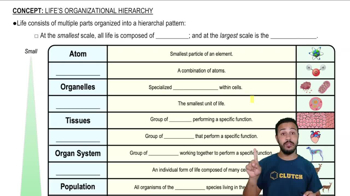
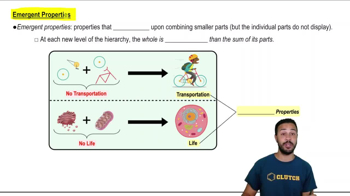
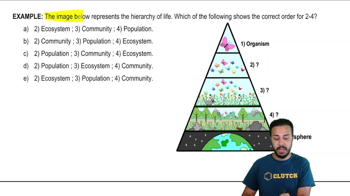
Hierarchy from largest to smallest: Biosphere, Biome, Ecosystem, Organism, Organ systems, Cells, Organelles, Molecules.
DNA stores genetic information that codes for proteins, determining organism differences and functions.
Energy flows from the sun through photosynthesis to producers, then to consumers and decomposers, with energy lost as heat at each step.
Mutualism, Commensalism, and Parasitism describe different ways organisms interact with each other.
Process where small variations in a species lead to adaptations that improve survival and reproduction over time.
Divergent evolution is when species share a common ancestor but evolve different traits; Convergent evolution is when unrelated species develop similar traits independently.
All living things must grow, reproduce, maintain internal balance, sense and respond to the environment, and obtain and use energy.
Eukaryota (complex cells), Bacteria, and Archaea (both prokaryotic but genetically distinct).
A hypothesis must be measurable, specific, and have a cause and effect relationship to be testable.
Correlation means two variables are related due to a third factor; causation means one variable directly affects another, proven by controlled experiments.
Atoms consist of a nucleus with protons (+) and neutrons, surrounded by electrons (-) in shells.
Atoms form bonds to fill their outer electron shell; valence electrons determine bonding behavior.
Covalent bonds share electrons, ionic bonds transfer electrons, hydrogen bonds are weak attractions, and hydrophobic interactions occur between nonpolar molecules.
Water is polar, a universal solvent, less dense as a solid, and has a high specific heat.
Ice is less dense than liquid water because hydrogen bonds form a crystal lattice that spaces molecules further apart.
Measures acidity/basicity; each pH unit represents a tenfold change in H+ concentration; water is neutral at pH 7.
Buffers minimize changes in pH by accepting or donating H+ ions, maintaining stable conditions like blood pH.
Carbon forms four covalent bonds, creating diverse molecules like chains, rings, and double bonds essential for life.
Saturated fats have no double bonds, unsaturated fats have cis double bonds causing kinks, trans fats have trans double bonds without kinks.
Carbohydrates, Proteins, Nucleic acids, and Lipids are essential macromolecules with unique structures and functions.
Provide quick energy; glucose is the main fuel, stored as glycogen in animals and starch in plants.
Primary (amino acid sequence), Secondary (alpha helices and beta sheets), Tertiary (3D folding), Quaternary (multiple subunits).
Side chains determine amino acid properties: non-polar, polar, acidic, or basic, affecting protein structure and function.
Information flows from DNA to RNA (transcription) to Protein (translation).
Changes in DNA sequence can alter protein function; effects range from none to harmful.
Adenosine triphosphate (ATP) stores and transfers energy in cells by breaking high-energy phosphate bonds.
Hydrophobic molecules repel water (e.g., lipids), hydrophilic molecules interact well with water (e.g., proteins).
Carrier proteins transport hydrophobic molecules like cholesterol through the aqueous blood by shielding them.