Skip to main content
General Biology
Il mio corso
Impara
Preparazione agli esami
AI Tutor
Guide di studio
Soluzioni per libri di testo
Flashcard
Esplora
Prova l'app
Il mio corso
Impara
Preparazione agli esami
AI Tutor
Guide di studio
Soluzioni per libri di testo
Flashcard
Esplora
Prova l'app
Indietro
General Biology: Key Concepts from Biological Science 8e (Chapters 3-6.1)
1 Lo studente ha trovato utile questo
Puoi toccare per girare la carta.
What is the primary structure of a protein?
Puoi toccare per girare la carta.
👆
What is the primary structure of a protein?
The
primary structure
is the unique sequence of amino acids in a polypeptide chain.
Avanzamenti del tracciato
I pulsanti di controllo sono stati cambiati in modalità "navigazione".
1/20
Video consigliati
1:59
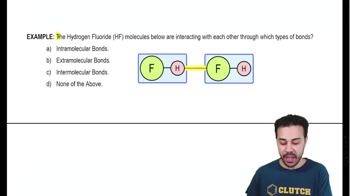
Introduction to Chemical Bonding Example 1
10306
views
188
rank
03:53
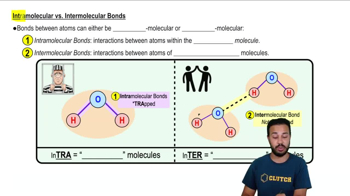
Intramolecular vs. Intermolecular Bonds
24635
views
481
rank
1
comments
02:42
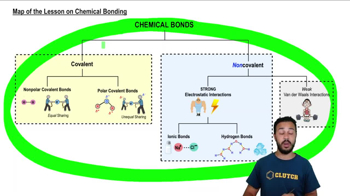
Map of the Lesson on Chemical Bonding
24251
views
329
rank
Termini in questo insieme (20)
Nascondere definizioni
What is the primary structure of a protein?
The
primary structure
is the unique sequence of amino acids in a polypeptide chain.
Define dehydration synthesis in biological molecules.
Dehydration synthesis
is a chemical reaction that links monomers by removing a water molecule.
What are the four major classes of biological macromolecules?
Carbohydrates, lipids, proteins,
and
nucleic acids
.
Describe the role of enzymes in biological reactions.
Enzymes act as
biological catalysts
that speed up reactions by lowering activation energy.
What is the function of nucleic acids?
Nucleic acids
store and transmit genetic information.
Explain the difference between DNA and RNA.
DNA contains
deoxyribose
sugar and is double-stranded; RNA contains
ribose
sugar and is single-stranded.
What is the significance of the phospholipid bilayer?
It forms the
cell membrane
, creating a selective barrier for cell transport.
Define the term 'isomer' in carbohydrates.
Isomers are molecules with the same molecular formula but different
structural arrangements
.
What is the role of ATP in cells?
ATP is the
primary energy currency
used to power cellular processes.
Describe the structure of an amino acid.
An amino acid has a central carbon bonded to an
amino group
,
carboxyl group
,
hydrogen atom
, and a variable
R group
.
What is the difference between saturated and unsaturated fats?
Saturated fats have
no double bonds
between carbons; unsaturated fats have
one or more double bonds
.
Explain the concept of complementary base pairing in DNA.
Adenine pairs with thymine, and cytosine pairs with guanine via
hydrogen bonds
.
What is the function of carbohydrates in cells?
Carbohydrates provide
energy storage
and structural support.
Define hydrolysis in the context of macromolecules.
Hydrolysis
is the breakdown of polymers into monomers by adding water.
What determines a protein's tertiary structure?
The tertiary structure is determined by interactions among
R groups
, including hydrogen bonds, ionic bonds, and hydrophobic interactions.
Describe the role of ribosomes in the cell.
Ribosomes synthesize proteins by translating mRNA sequences.
What is the basic unit of life?
The
cell
is the basic structural and functional unit of all living organisms.
Explain the fluid mosaic model of the cell membrane.
The model describes the membrane as a
fluid
phospholipid bilayer with embedded proteins forming a
mosaic
.
What is an enzyme's active site?
The
active site
is the region where substrate molecules bind and undergo a chemical reaction.
How do nucleotides form nucleic acids?
Nucleotides link via
phosphodiester bonds
between the sugar of one nucleotide and the phosphate of the next.
 IndietroIndietro
 1:59