Skip to main content
General Biology
Il mio corso
Impara
Preparazione agli esami
AI Tutor
Guide di studio
Soluzioni per libri di testo
Flashcard
Esplora
Prova l'app
Il mio corso
Impara
Preparazione agli esami
AI Tutor
Guide di studio
Soluzioni per libri di testo
Flashcard
Esplora
Prova l'app
Indietro
General Biology: Key Concepts in Water, Elements, Macromolecules, and Biomolecules
Puoi toccare per girare la carta.
What causes water's polarity?
Puoi toccare per girare la carta.
👆
What causes water's polarity?
Oxygen pulls shared electrons harder than hydrogen, creating an uneven charge.
Avanzamenti del tracciato
I pulsanti di controllo sono stati cambiati in modalità "navigazione".
1/37
Video consigliati
05:03
Hydrogen Bonding
23398
views
383
rank
1
comments
Termini in questo insieme (37)
Nascondere definizioni
What causes water's polarity?
Oxygen pulls shared electrons harder than hydrogen, creating an uneven charge.
What is a hydrogen bond?
A weak attraction between a positive hydrogen atom and a negative atom in another molecule.
What allows water to hydrogen bond?
Its polar covalent bonds and bent shape.
Name properties of water due to its polarity.
Cohesion, adhesion, high specific heat, surface tension, and excellent dissolving abilities.
Difference between cohesion and adhesion?
Cohesion is water sticking to water; adhesion is water sticking to other surfaces.
Why does water have high surface tension?
Hydrogen bonds pull surface molecules tightly together, making it hard to break the surface.
What does high heat capacity of water mean?
It takes a large amount of heat energy to change water's temperature.
What is evaporative cooling?
The surface cools as the hottest liquid molecules evaporate away as gas.
Why is water a good solvent?
Its polar charges attract and break apart ionic and polar substances.
Difference between hydrophilic and hydrophobic?
Hydrophilic means water-loving (dissolves); hydrophobic means water-fearing (does not dissolve).
What 4 major elements make up most living organisms?
Carbon, Hydrogen, Oxygen, and Nitrogen (CHON).
What defines an organic compound?
It contains carbon bonded to hydrogen (C-H bonds).
Why is carbon important for building molecules?
It has four valence electrons, allowing four stable covalent bonds.
What are trace elements and their importance?
Elements needed in tiny amounts (like iron); essential for survival.
What are the 4 classes of biomacromolecules?
Carbohydrates, Lipids, Proteins, and Nucleic Acids.
Difference between monomer and polymer?
A monomer is a single building block; a polymer is a long chain of monomers.
Which macromolecules follow monomer-polymer format?
Carbohydrates, Proteins, and Nucleic Acids (Lipids do not).
What does dehydration synthesis do?
Connects monomers into polymers by removing a water molecule.
What is hydrolysis?
Splitting apart polymers into monomers by adding a water molecule.
Define carbohydrate and its types.
Sugars used for energy and structure; types include monosaccharides, disaccharides, and polysaccharides.
What elements are in carbohydrates?
Carbon, Hydrogen, and Oxygen (CHO).
Typical element ratio in monosaccharides?
1:2:1 ratio of Carbon:Hydrogen:Oxygen (CH₂O).
What bond links two monosaccharides?
A glycosidic linkage formed by dehydration synthesis.
Difference between branched and unbranched polysaccharides?
Branched have side-chains for fast energy release; unbranched form straight fibers for structure.
How are lipids different from other macromolecules?
They are not true polymers and are highly hydrophobic.
What are the two major components of lipids?
Glycerol and fatty acids.
What bond connects fatty acids to glycerol?
An ester linkage.
Difference between saturated and unsaturated fatty acids?
Saturated have no double bonds (straight); unsaturated have one or more double bonds (kinked).
What is a phospholipid and its function?
A lipid with one hydrophilic head and two hydrophobic tails; forms cell membrane bilayers.
What is the function of nucleic acids?
To store and transmit genetic information.
What is the monomer of nucleic acids?
A nucleotide composed of sugar, phosphate group, and nitrogenous base.
How do nitrogenous bases pair in DNA?
Adenine pairs with Thymine (A-T); Guanine pairs with Cytosine (G-C).
Differences between DNA and RNA?
DNA is double-stranded with deoxyribose and Thymine; RNA is single-stranded with ribose and Uracil.
What are proteins made of?
Amino acids linked by peptide bonds.
What determines amino acid properties?
The R group (side chain).
Describe the four levels of protein structure.
Primary: amino acid sequence; Secondary: coils/pleats; Tertiary: 3D shape; Quaternary: multiple chains.
What is denaturation?
Protein unfolding due to environmental factors, causing loss of function.
 IndietroIndietro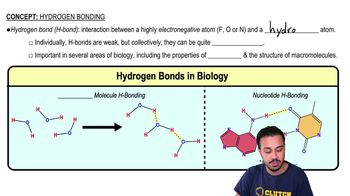
 05:03
05:03