 Indietro
General Biology: Key Terms in Biochemistry and Molecular Biology
 02:00
02:00
Termini in questo insieme (39)
The building block of proteins, containing an amino group, a carboxyl group, and a unique side chain.
A synthetic variant of testosterone that promotes muscle growth and other anabolic effects.
Organic compounds made of carbon, hydrogen, and oxygen, serving as energy sources and structural materials.
A polysaccharide consisting of glucose monomers that forms plant cell walls and provides structural support.
A structural polysaccharide found in the exoskeleton of arthropods and fungal cell walls.
A steroid molecule important in cell membrane structure and precursor to steroid hormones.
A chemical reaction that links monomers by removing a water molecule.
The process where proteins lose their native structure and function due to external stress like heat or pH changes.
The molecule that stores genetic information in cells, composed of nucleotides forming a double helix.
A carbohydrate composed of two monosaccharides linked by a glycosidic bond.
The twisted ladder shape of DNA formed by two complementary strands of nucleotides.
A protein that acts as a biological catalyst to speed up chemical reactions.
A lipid composed of glycerol and three fatty acids, used for long-term energy storage.
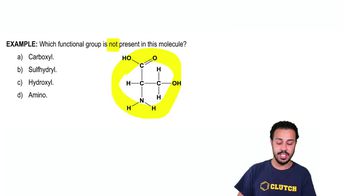
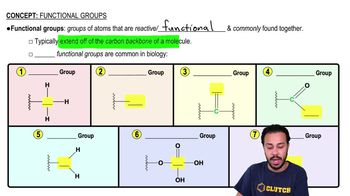
Specific groups of atoms within molecules that determine chemical properties and reactions.
A segment of DNA that codes for a functional product, usually a protein.
The process by which information from a gene is used to synthesize a functional gene product like a protein.
A common monosaccharide sugar that serves as a primary energy source for cells.
A polysaccharide that serves as the main storage form of glucose in animals.
Organic molecules consisting entirely of carbon and hydrogen atoms.
A chemical reaction that breaks bonds between monomers by adding water.
Having an affinity for water; typically polar or charged molecules.
Repelling water; typically nonpolar molecules that do not mix with water.
Compounds with the same molecular formula but different structures and properties.
A diverse group of hydrophobic molecules including fats, phospholipids, and steroids.
A large molecule made up of smaller subunits called monomers, such as proteins, nucleic acids, carbohydrates, and lipids.
The simplest form of carbohydrate, consisting of a single sugar molecule like glucose.
Polymers made of nucleotide monomers that store and transmit genetic information (DNA and RNA).
The covalent bond that links amino acids together in a protein chain.
A lipid with a hydrophilic head and two hydrophobic tails, forming cell membranes.
A carbohydrate polymer made of many monosaccharides linked together.
A macromolecule composed of one or more polypeptides folded into a functional shape.
A nucleic acid involved in gene expression and protein synthesis.
A fatty acid with no double bonds between carbon atoms, typically solid at room temperature.
Local folding of a protein into alpha helices and beta sheets stabilized by hydrogen bonds.
A polysaccharide used by plants to store energy, composed of glucose monomers.
A lipid characterized by a carbon skeleton of four fused rings, including cholesterol and hormones.
The overall three-dimensional shape of a single polypeptide chain.
An unsaturated fat with trans double bonds, often artificially produced and linked to health risks.
Fatty acids with one or more double bonds, usually liquid at room temperature.