 Indietro
General Biology: Macromolecules and Cell Structure
 01:17
01:17
Termini in questo insieme (31)
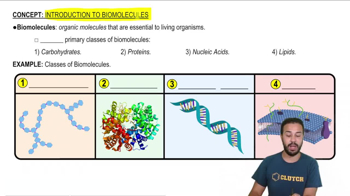
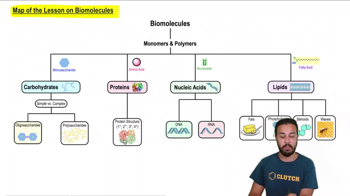
Carbohydrates, lipids, proteins, and nucleic acids.
Quick energy and short-term energy storage.
Carbon, hydrogen, and oxygen (C, H, O).
Monosaccharides (simple sugars).
Glucose.
Long-term energy storage, insulation, and forming cell membranes.
Glycerol and fatty acids.
Lipids, especially phospholipids.
Perform many cell functions including acting as enzymes and providing structure.
Amino acids.
A protein that speeds up a chemical reaction.
Store and transmit genetic information.
DNA and RNA.
The cell's genetic information and instructions.
Use genetic information to help make proteins.
A specialized structure inside a cell that performs a particular function.
The thin boundary that controls what enters and leaves the cell.
The organelle that contains most of the cell's DNA.
Structures that make proteins.
Helps make and process proteins; has ribosomes attached.
Helps make lipids and detoxifies; has no ribosomes attached.
Modifies, sorts, and packages proteins and other molecules.
Break down and recycle materials in the cell.
Produce ATP, a usable form of energy for the cell.
A molecule cells use as an immediate source of energy.
Provides shape, support, organization, and movement.
Storage of water and other substances.
Cell wall, chloroplasts, and a large central vacuole.
Provides support and protection to plant cells.
Carry out photosynthesis.
The process plants use to convert light energy into stored chemical energy.