Skip to main content
General Biology
Il mio corso
Impara
Preparazione agli esami
AI Tutor
Guide di studio
Soluzioni per libri di testo
Flashcard
Esplora
Prova l'app
Il mio corso
Impara
Preparazione agli esami
AI Tutor
Guide di studio
Soluzioni per libri di testo
Flashcard
Esplora
Prova l'app
Indietro
General Biology: Molecules of Cells
Puoi toccare per girare la carta.
Why is lactose intolerance considered normal in adult humans?
Puoi toccare per girare la carta.
👆
Why is lactose intolerance considered normal in adult humans?
Lactose intolerance is normal because most adult humans produce less lactase enzyme after infancy, reducing their ability to digest lactose.
Avanzamenti del tracciato
I pulsanti di controllo sono stati cambiati in modalità "navigazione".
1/23
Video consigliati
03:35
Carbon is an Excellent Building Block
22740
views
903
rank
04:19
Carbon
29944
views
708
rank
2
comments
Termini in questo insieme (23)
Nascondere definizioni
Why is lactose intolerance considered normal in adult humans?
Lactose intolerance is normal because most adult humans produce less lactase enzyme after infancy, reducing their ability to digest lactose.
Why is carbon unparalleled in forming large, diverse molecules?
Carbon has four valence electrons allowing it to form four covalent bonds, enabling complex, diverse, and stable organic molecules.
Define organic compounds.
Organic compounds are molecules containing carbon atoms bonded to hydrogen, often forming the basis of life’s molecules.
What is a hydrocarbon?
A hydrocarbon is an organic molecule consisting only of carbon and hydrogen atoms.
What is a carbon skeleton?
A carbon skeleton is the chain of carbon atoms that forms the backbone of an organic molecule.
What is an isomer?
Isomers are molecules with the same molecular formula but different structures and properties.
Name the six chemical groups important in the chemistry of life.
Hydroxyl, carbonyl, carboxyl, amino, sulfhydryl, and phosphate groups.
List the four main classes of macromolecules important to life.
Carbohydrates, lipids, proteins, and nucleic acids.
What is the relationship between monomers and polymers?
Polymers are large molecules made by linking monomers, which are smaller, repeating units.
Compare dehydration synthesis and hydrolysis.
Dehydration synthesis builds polymers by removing water; hydrolysis breaks polymers by adding water.
Describe the structure of carbohydrates.
Carbohydrates are composed of carbon, hydrogen, and oxygen, often in a ratio of 1:2:1, forming sugars and starches.
What are the functions of carbohydrates?
Carbohydrates provide energy, store energy, and serve as structural components in cells.
Why has the FDA proposed including grams of added sugars on food labels?
To help consumers monitor and reduce intake of added sugars linked to health risks.
Describe the structure of lipids.
Lipids are hydrophobic molecules including fats, phospholipids, and steroids, mainly composed of hydrocarbons.
What health risks are associated with trans fats compared to saturated fats?
Trans fats increase heart disease risk more than saturated fats by raising bad cholesterol and lowering good cholesterol.
Why are phospholipids essential for cell membranes?
Phospholipids have hydrophilic heads and hydrophobic tails, forming bilayers that create cell membranes.
What health risks are linked to anabolic steroid use?
Anabolic steroids can cause liver damage, heart problems, hormonal imbalances, and behavioral changes.
Describe the structure of proteins.
Proteins are polymers of amino acids linked by peptide bonds, folding into specific 3D shapes.
How does a protein’s shape determine its function?
A protein’s specific shape allows it to interact precisely with other molecules, determining its role.
What are the four levels of protein structure?
Primary (amino acid sequence), secondary (alpha helices and beta sheets), tertiary (3D folding), and quaternary (multiple polypeptides).
Compare the structures of DNA and RNA.
DNA is double-stranded with deoxyribose sugar; RNA is single-stranded with ribose sugar.
Compare the functions of DNA and RNA.
DNA stores genetic information; RNA helps in protein synthesis and gene regulation.
What is the adaptive advantage of lactose tolerance in East African populations?
Lactose tolerance allows digestion of milk into adulthood, providing a nutritional advantage in pastoralist societies.
 IndietroIndietro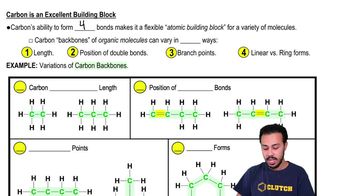
 03:35
03:35