 Indietro
General Biology: Patterns of Inheritance
 02:09

Termini in questo insieme (29)
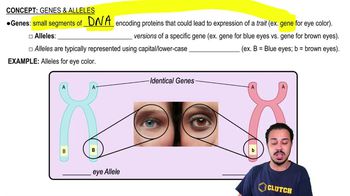
Gene is a segment of DNA that codes for a specific trait or protein.
Allele is a variant form of a gene found at the same locus on homologous chromosomes.
Locus is the specific physical location of a gene on a chromosome.
Genotype is the genetic makeup of an organism, referring to the alleles present.
Phenotype is the observable physical or biochemical characteristics of an organism.
Homozygous means having two identical alleles for a particular gene.
Heterozygous means having two different alleles for a particular gene.
Dominant allele is one that expresses its trait even when only one copy is present.
Recessive allele is one that only expresses its trait when two copies are present.
Law of Segregation states that allele pairs separate during gamete formation, so each gamete carries only one allele.
Law of Independent Assortment states that genes for different traits assort independently during gamete formation.
True-breeding organisms produce offspring identical to themselves for a specific trait when self-crossed.
Hybrid is an organism with two different alleles for a trait, typically from crossing true-breeding parents.
The genotype ratio is 1 PP : 2 Pp : 1 pp.
The phenotype ratio is 3 purple : 1 white.
Incomplete dominance is shown by coat color in horses, where heterozygotes have an intermediate phenotype.
Codominance is shown by human ABO blood groups, where both alleles are fully expressed.
Polygenic inheritance is shown by human skin color, controlled by multiple genes.
Pleiotropy is shown by the nude mice mutation, where one gene affects multiple traits.
Males have only one X chromosome, so a single recessive allele on X is expressed without a dominant allele to mask it.
0% of daughters will be colorblind; daughters will be either carriers or normal.
Sickle-cell anemia is an autosomal recessive disorder.
Huntington disease is an autosomal dominant disorder.
Hemophilia is a sex-linked recessive disorder, usually X-linked.
Sickle-cell persists because carriers have resistance to malaria, providing a selective advantage.
Genotype ratio: 1 AA : 2 Aa : 1 aa; Probability child has disease (aa) is 25%.
Probability child is a carrier (Aa) is 50%.
It helps predict disease risk, guide genetic counseling, and develop targeted treatments.
Nutrition can affect height, showing how environment influences gene expression.