 Indietro
General Biology: Plant Structure and Life Cycle
 06:17
06:17
Termini in questo insieme (23)
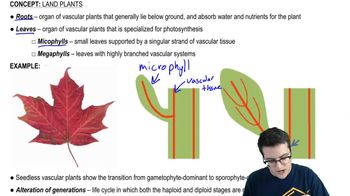
Vascular tissue is the plant tissue that transports materials such as water, minerals, and sugars throughout the plant.
The gametophyte is the haploid (n) generation in the plant life cycle that produces gametes.
Mosses are nonvascular plants that lack vascular tissue and have a dominant haploid generation.
Lignin is a material in plant cell walls that provides strength and physical support.
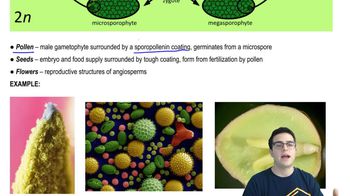
Pollen is a structure that delivers sperm cells in seed plants.
The Mesozoic is a geological period when seed plants became successful and widespread.
A seed is a plant embryo surrounded by nutritive material and a protective coat.
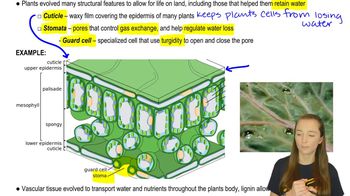
Phloem is vascular tissue that transports sugars and products of photosynthesis throughout the plant.
Angiosperms are flowering plants that produce seeds enclosed in fruits.
A fruit is a structure that protects and helps disperse seeds in angiosperms.
Endosperm is tissue in angiosperm seeds that nourishes the developing embryo.
Stomata are openings in leaves that allow gas exchange.
Plantae is the kingdom containing multicellular, photosynthetic organisms (plants).
The Carboniferous is a period when ferns and their relatives were dominant land plants.
Gymnosperms are seed plants like pines whose seeds are not enclosed in a fruit.
Haploid means having one set of chromosomes (n); mosses are haploid during their dominant generation.
Sporophyte is the diploid (2n) generation in the plant life cycle.
Ferns are vascular plants that reproduce and disperse by spores rather than seeds.
Xylem is vascular tissue that transports water and minerals through a plant.
Animals, especially insects, are the most common pollinators of many angiosperms.
The cuticle is a waxy covering on plants that helps prevent water loss and desiccation.
A flower contains the reproductive structures of angiosperms and can attract pollinators.
The ovary is part of the flower that develops into the fruit after fertilization.