Skip to main content
General Biology
Il mio corso
Impara
Preparazione agli esami
AI Tutor
Guide di studio
Soluzioni per libri di testo
Flashcard
Esplora
Prova l'app
Il mio corso
Impara
Preparazione agli esami
AI Tutor
Guide di studio
Soluzioni per libri di testo
Flashcard
Esplora
Prova l'app
Indietro
General Biology: Proteins and Chemistry Fundamentals
Puoi toccare per girare la carta.
What is matter?
Puoi toccare per girare la carta.
👆
What is matter?
Matter
is anything that has mass and occupies space.
Avanzamenti del tracciato
I pulsanti di controllo sono stati cambiati in modalità "navigazione".
1/20
Video consigliati
02:13
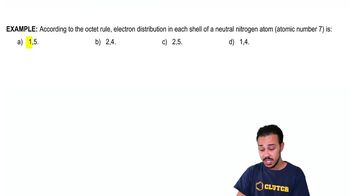
Atoms- Smallest Unit of Matter Example 1
30342
views
790
rank
2
comments
03:51
Atoms- Smallest Unit of Matter Example 3
19737
views
424
rank
1
comments
09:44
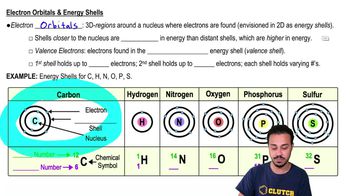
Electron Orbitals & Energy Shells
27463
views
588
rank
3
comments
Termini in questo insieme (20)
Nascondere definizioni
What is matter?
Matter
is anything that has mass and occupies space.
Define an atom.
An
atom
is the smallest unit of an element that retains the properties of that element.
What is a molecule?
A
molecule
is two or more atoms chemically bonded together.
Name the main types of chemical bonds.
The main types are
covalent bonds
,
ionic bonds
, and
partial charge interactions
like hydrogen bonds.
What is a chemical reaction?
A
chemical reaction
involves the making or breaking of chemical bonds to form new substances.
Why is water important in biology?
Water is a
polar molecule
that can form hydrogen bonds and act as both an acid and a base.
What is pH?
pH
measures the acidity or basicity of a solution, based on hydrogen ion concentration.
What is carbon chemistry centered on?
Carbon chemistry centers on carbon's ability to form
four covalent bonds
with other atoms.
What is a polymer?
A
polymer
is a large molecule made up of repeating smaller units called monomers.
What is a polypeptide?
A
polypeptide
is a polymer made of amino acid monomers linked by peptide bonds.
What is an amino acid?
An
amino acid
is an organic molecule with an amino group, a carboxyl group, a hydrogen atom, and a variable side chain.
How are amino acids classified by side-chain polarity?
Amino acids can be
polar noncharged
,
charged
, or
nonpolar
based on their side chains.
What is the primary structure of a protein?
The
primary structure
is the linear sequence of amino acids in a polypeptide chain.
What bonds link amino acids in a polypeptide?
Amino acids are linked by
peptide bonds
between the carboxyl carbon and amino nitrogen atoms.
Name the two most common secondary structures in proteins.
The two most common secondary structures are the
alpha helix
and the
beta sheet
.
What forces stabilize secondary protein structure?
Secondary structures are stabilized mainly by
hydrogen bonds
between backbone atoms.
What is tertiary protein structure?
The
tertiary structure
is the overall 3D shape of a single polypeptide, including side chain orientations.
List forces contributing to protein tertiary structure.
Forces include
hydrogen bonds
,
ionic bonds
,
van der Waals forces
,
disulfide covalent bonds
, and the
hydrophobic effect
.
What is quaternary protein structure?
The
quaternary structure
is the arrangement of multiple polypeptide subunits in a protein complex.
How can a polypeptide be chemically denatured?
Denaturation can occur by disrupting bonds, e.g., using chemicals that break hydrogen or disulfide bonds.
 IndietroIndietro
 02:13
02:13