 Indietro
General Biology: Proteins and Polypeptides
 08:02
08:02
Termini in questo insieme (20)
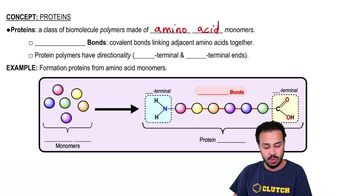
A polypeptide is a polymer made up of amino acids linked by peptide bonds.
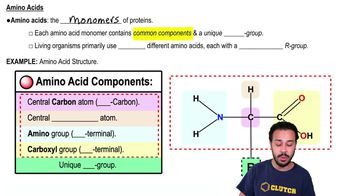
An amino acid is an organic molecule with an amino group, a carboxyl group, a hydrogen atom, and a variable side chain (R group) attached to a central carbon.
A peptide bond links the carboxyl carbon of one amino acid to the amino nitrogen of the next.
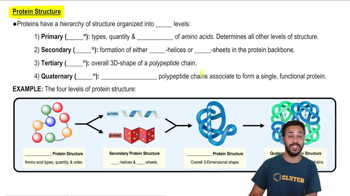
The two most common secondary structures are the alpha helix and the beta sheet.
Hydrogen bonds stabilize secondary structures by holding alpha helices and beta sheets in shape.
The primary structure is the linear sequence of amino acids in a polypeptide chain.
The tertiary structure is the overall 3D folding of a single polypeptide, including arrangements of secondary structures and side chains.
Tertiary structure is stabilized by hydrogen bonds, ionic bonds, van der Waals forces, disulfide bonds, and the hydrophobic effect.
Quaternary structure is the arrangement of multiple polypeptide subunits into a functional protein complex.
Denaturation can be caused by disrupting non-covalent interactions, such as breaking hydrogen bonds or ionic bonds, often using chemicals like urea or changes in pH.
The R group determines the amino acid's polarity, charge, size, and chemical properties, influencing protein folding and function.
The hydrophobic effect drives nonpolar side chains to the protein interior, stabilizing the folded structure by avoiding water.
Disulfide bonds are covalent links between cysteine residues that stabilize tertiary and quaternary structures.
Ionic bonds form between oppositely charged side chains, helping stabilize protein structure.
Polar side chains can form hydrogen bonds and interact with water; nonpolar side chains are hydrophobic and tend to be buried inside proteins.
An alpha helix is a right-handed coil stabilized by hydrogen bonds between backbone atoms every four residues.
A beta sheet consists of beta strands connected laterally by hydrogen bonds, forming a sheet-like arrangement.
A peptide bond forms by a condensation reaction where a water molecule is released between the carboxyl group of one amino acid and the amino group of another.
Proteins serve diverse roles including enzymes, structural components, transport, signaling, and immune responses.
Proper protein folding is essential for biological function; misfolding can lead to loss of function or disease.